
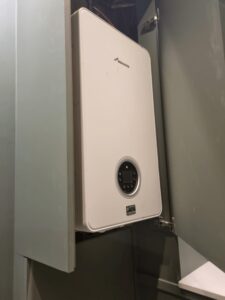

There is a particular kind of frustration that comes from a radiator that is warm at the bottom and stone cold at the top. You crank the thermostat up, wait half an hour, and nothing changes. If that sounds familiar, the chances are your central heating system has trapped air in it, and knowing how to bleed air from a Worcester Bosch boiler and its radiators is genuinely one of the most useful things a homeowner can learn. It takes about ten minutes, costs nothing, and can make a real difference to how well your heating performs.
Quick answer
Trapped air in a central heating system stops water from circulating properly, which is why some radiators heat unevenly or not at all. To fix it, you bleed the radiators using a radiator key, then check the boiler pressure and top it up if it has dropped. On a Worcester Bosch boiler, the pressure gauge should sit between 1 and 1.5 bar after bleeding. If problems continue, there may be something else going on.
Why air gets trapped in a heating system
Air finds its way into central heating systems more often than most people realise. It can happen during installation if the system was not properly purged. It also enters gradually through the water itself, as dissolved gases come out of solution over time. Older systems tend to suffer more, but even a relatively new combi boiler setup can develop air pockets if there has been recent work done on the pipework or if a radiator was replaced.
Another common cause is low system pressure. When the pressure drops below a certain point, air can be drawn into the system through micro-leaks or the filling loop. So if you find yourself bleeding radiators every few months, low pressure may be the underlying issue rather than a one-off problem.
Inhibitor levels matter too. Central heating systems should contain a corrosion inhibitor in the water. When it is depleted, the system can start producing hydrogen gas through internal corrosion. That gas builds up and causes airlocks, which is a more serious version of the same problem. Most people overlook this completely until something more expensive goes wrong.
Signs that air is trapped in your system
The most obvious sign is a radiator that is hot at the bottom but cold or lukewarm at the top. That cold patch is exactly where the air has collected, since air rises and sits above the hot water.
You might also hear gurgling, bubbling, or knocking sounds coming from the radiators or pipes. That is the sound of water trying to push past an air pocket. It is not dangerous but it is not ideal either.
In some cases, the boiler pressure drops more frequently than it should. If you are topping up the pressure every few weeks without an obvious reason, bleeding the system and then checking for small leaks would be a sensible first step.
Some homeowners also notice the boiler firing up and shutting off more frequently than usual, or that it takes longer than expected for rooms to reach temperature. Both can be connected to air in the system reducing circulation efficiency.
What you will need
Before starting, gather a few things. You will need a radiator bleed key, which costs around £1 to £2 from any hardware shop or DIY store. Have a cloth or small bowl ready to catch any water that drips out. You will also want to check you know where the pressure gauge on the Worcester Bosch boiler is and how the filling loop works, because you will likely need to repressurise after bleeding.
How to bleed air from a Worcester Bosch boiler: step by step
Step 1: Turn the heating on. Run the central heating for about ten to fifteen minutes so all the radiators heat up. This helps you identify which ones have cold spots and makes the air pockets easier to locate.
Step 2: Identify which radiators need bleeding. Work through each radiator in the house. Feel across the surface from top to bottom. Any that are significantly colder at the top than the bottom need attention. Make a mental note or a quick list.
Step 3: Turn the heating off and wait. Switch the heating off and give it around twenty minutes to cool down slightly. You do not want to bleed a radiator while the pump is running, as it can draw more air in. You also want to avoid getting scalded by pressurised hot water.
Step 4: Start with the radiators furthest from the boiler. Work from the top floor down and from the furthest point back toward the boiler. This helps push the air out of the system in the right direction.
Step 5: Bleed each radiator. Hold your cloth under the bleed valve, which is the small square or hexagonal fitting at the top corner of the radiator. Insert the bleed key and turn it slowly anti-clockwise, just a quarter to half a turn. You will hear a hissing sound as the air escapes. Hold it there until the hissing stops and a steady trickle of water appears. Then tighten the valve back up. Do not overtighten.
Step 6: Check the boiler pressure. Once you have bled all the radiators that needed it, go back to the Worcester Bosch boiler and check the pressure gauge. Bleeding releases water along with the air, so pressure nearly always drops. If it is below 1 bar, you will need to repressurise using the filling loop.
Step 7: Repressurise if needed. The filling loop is usually a silver braided flexible hose underneath the boiler, with one or two valves. Open the valve or valves slowly until the gauge reads about 1.2 bar, then close them and remove the loop if it is the detachable type. Do not overfill.
Step 8: Switch the heating back on. Run the system again and check the radiators. They should now heat more evenly. If one or two are still not right, they may need bleeding again or there could be a more significant circulation problem.
When bleeding does not fix the problem
Sometimes you go through the whole process and the radiators are still not performing properly. That is frustrating, but it does narrow things down.
If a radiator stays completely cold even after bleeding, it may have a stuck thermostatic radiator valve (TRV). These valves can seize up, especially on radiators that have not been used all summer. Try turning the valve head manually, or removing it and pushing the pin underneath down with a screwdriver. That often frees it.
If multiple radiators are cold at the bottom as well as the top, that points to a sludge buildup rather than an air problem. Sludge is black iron oxide that accumulates inside the system over years and restricts flow. The fix for that is a powerflush, which is a more involved job that requires a professional.
If the pressure keeps dropping within days of topping it up, you have a leak somewhere. That could be at a radiator valve, a joint under the floorboards, or even a small weep from the boiler itself. Get a Gas Safe engineer to trace it before it causes damage.
When to call a Gas Safe engineer
Bleeding radiators is a safe DIY job. But there are situations where you should bring in a professional rather than pushing forward.
If you suspect a leak in the pipework, do not keep refilling the system. Call an engineer to find and fix the source.
If the boiler is showing a fault code alongside the heating problems, the air issue may be a symptom of something larger. Fault codes on a Worcester Bosch boiler should always be investigated properly.
If you are not confident working around the filling loop or pressure gauge, there is no shame in calling someone. A call-out for a repressurise and bleed carried out by an engineer typically costs around £60 to £100. That is worth paying for peace of mind.
If the boiler pressure drops again within a week of you sorting it, that is a definite sign to get professional eyes on the system.
The cost of related repairs in the UK
Most of the time, bleeding radiators costs you nothing but a bit of time. However, if bleeding reveals an underlying problem, here is what to expect in terms of costs.
Replacing a thermostatic radiator valve that has seized typically costs between £80 and £150 including labour. If multiple valves need replacing at the same time, engineers will often do a deal on the labour element.
A powerflush to clear sludge from the central heating system costs between £300 and £600 for a typical UK home, depending on the number of radiators and how badly the system is affected. It sounds like a lot, but a system full of sludge can cut boiler efficiency significantly and shorten its lifespan. On balance, it tends to pay for itself.
Fixing a small leak in the pipework varies a great deal depending on where it is. An accessible joint that needs resealing might be sorted for £80 to £120. A leak under floorboards or behind plasterwork costs considerably more once access is factored in.
Adding or refreshing corrosion inhibitor is something an engineer can do during a service for minimal extra cost. A bottle of inhibitor costs around £15 to £20 if you want to add it yourself via the filling loop, and it is well worth doing if it has not been topped up in a few years.
Annual boiler servicing, which includes checking the system water quality, typically runs between £80 and £120 in most areas of the UK. Getting that done every year is, in my opinion, the single most effective way to avoid the kind of problems that lead to cold radiators and expensive repairs.
Common mistakes to avoid
The most common mistake is bleeding radiators while the heating is still running. Always switch the pump off first. If the pump is active, you risk pulling more air into the system through the bleed valve rather than releasing it.
Overtightening the bleed valve is another one. It seems logical to tighten it firmly after bleeding, but bleed valves are small and the threads are easy to strip. Snug is enough.
Skipping the pressure check after bleeding is something a lot of people do. They bleed the radiators, the heating seems better, and they forget to check the gauge. If the pressure has dropped to 0.5 bar or below, the boiler may lock out within a day or two and they will be puzzled about why.
Finally, many homeowners only bleed the obvious radiators rather than going through every one. Even a radiator that feels mostly warm could have a small air pocket at the top that is slightly reducing efficiency. It takes an extra thirty seconds per radiator to check them all properly.
Read more: Worcester boiler error codes
Regular bleeding is one of those maintenance habits that pays off quietly over time. A well-maintained central heating system runs more efficiently, costs less to heat your home, and is far less likely to throw up a surprise fault in the middle of winter. If you have never bled your radiators before, this is a genuinely good place to start. And if it turns out the problem is something more than air, at least you will know that quickly rather than after weeks of chasing the wrong fix.