
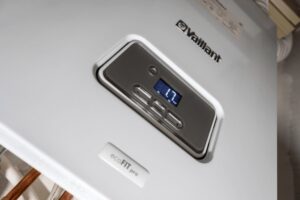

If you are getting a new boiler fitted and you have been doing any research at all, the chances are these two names keep coming up. Worcester Bosch boilers vs Vaillant is one of the most searched comparisons in the UK boiler market, and for good reason.
Both brands are genuinely well regarded, both have been in the UK for decades, and both make products that heating engineers regularly recommend. But they are not identical, and depending on your home, your budget, and what matters most to you, one may well suit you better than the other. This guide breaks it all down in plain English so you can make a proper decision rather than just going with whatever your installer happens to stock.
Both Worcester Bosch and Vaillant are among the best boiler brands available in the UK. Worcester Bosch tends to edge ahead on reliability scores and customer satisfaction, while Vaillant is often praised for efficiency and build quality. The price difference between comparable models is usually fairly modest. For most UK homes, either brand will serve you well for ten to fifteen years if properly maintained.
What Makes These Two Brands Worth Comparing
Worcester Bosch has been manufacturing boilers in the UK since the 1960s, and their Greenstar range of combi boilers is probably the most commonly installed in British homes. They have a reputation among Gas Safe engineers for being straightforward to install and service, which matters more than people realise.
Vaillant is a German brand with an equally long history and a strong presence in the UK market. Their ecoTEC range is their main combi boiler line and has consistently rated highly for energy efficiency. Vaillant put a lot of emphasis on their ErP ratings, which is the EU energy efficiency scale, and their newer models perform very well on that front.
What most people do not realise when comparing boilers is that the brand is only part of the story. The installation quality matters just as much, if not more, than which name is on the front of the unit.
Comparing the Two Brands Across Key Areas
Reliability
This is often the first thing people want to know, and it is also where Worcester Bosch tends to get the edge in most independent surveys. Which? magazine and similar consumer bodies have consistently placed Worcester Bosch near the top for owner satisfaction and reliability. Vaillant also scores well, generally sitting just behind Worcester Bosch in the same surveys.
That said, both brands produce tens of thousands of units every year, and there will always be individual units that develop faults. Neither brand is immune to the occasional lemon. The difference in reliability between the two is not dramatic enough to be a dealbreaker on its own.
Efficiency
Both brands manufacture A-rated condensing boilers, which is now standard across the market. Vaillant’s newer ecoTEC models, particularly the ecoTEC Plus and ecoTEC Exclusive ranges, push very high ErP ratings and are designed with efficiency as a core selling point. Worcester Bosch’s Greenstar range is also highly efficient, with several models hitting 94% or above.
In practice, the difference in running costs between a top-spec Worcester Bosch and a top-spec Vaillant is minimal. If you are replacing an old G-rated boiler with either of these modern units, you will notice a significant improvement in your gas bills. The marginal difference between the two brands will not meaningfully change what you pay on your energy bills.
Range of Products
Both brands offer combi boilers, system boilers, and heat-only (regular) boilers to suit different types of homes.
Combi boilers are the most popular in the UK, particularly in smaller homes and flats where there is no space for a hot water cylinder. They provide hot water on demand without needing a tank, which keeps things simple.
System boilers work with an unvented hot water cylinder and are better suited to larger homes with higher hot water demand. If you have multiple bathrooms and a family that all want showers in the morning, a combi boiler will struggle regardless of which brand it is.
Regular boilers, also called conventional or heat-only boilers, pair with both a cold water tank and a hot water cylinder. They are increasingly uncommon in new installations but are often the right choice when replacing an older system in a period property where the existing pipework suits that setup.
Worcester Bosch arguably has a slightly broader product range across all three categories and offer a few models specifically designed for larger homes. Vaillant’s strength is arguably more concentrated in their mid-to-high-efficiency combi boiler range.
Warranty
This is where things get interesting. Worcester Bosch has for a long time offered one of the better standard warranties in the industry, typically five to ten years on their Greenstar range depending on the model and whether the installation is carried out by a Worcester Bosch Accredited Installer. Vaillant offers a similar warranty structure, with up to ten years available on certain models when installed by a Vaillant Advanced Installer.
The catch with both brands is that the longer warranties are usually tied to using an accredited installer and sometimes to registering the boiler within a set time period after installation. If you use a non-accredited installer to save money, you may end up with a shorter warranty than you expected. Most people overlook this when getting quotes.
Cost to Buy and Install
This is the part most people jump to first. In terms of unit price, Worcester Bosch and Vaillant are broadly similar across equivalent models. A mid-range combi boiler from either brand will typically cost between £800 and £1,200 for the unit itself. Their premium models can push to £1,500 or more.
Full installation costs in the UK, including the unit, labour, and any necessary pipework or system modifications, typically fall between £1,800 and £3,500. The wide range reflects differences in regional labour costs, the complexity of the installation, and whether additional work like a new flue position or system flush is required.
London and the South East will generally be at the higher end of that range. Northern England, Scotland, and Wales tend to be lower. Getting three quotes from Gas Safe registered engineers is still the best way to understand what you should actually be paying in your area.
Parts Availability and Repair Costs
Both brands are widely used enough that parts are generally available without long waits. Worcester Bosch parts are particularly widely stocked among UK heating merchants, which can make repairs slightly faster and sometimes marginally cheaper.
Typical repair costs for either brand are broadly similar. An ignition fault might cost £80 to £200 to fix. A diverter valve replacement tends to run £200 to £400. A PCB fault, which is one of the more expensive repairs on any brand, can push to £400 to £600 or more. There is no significant difference between the two brands in terms of typical repair pricing.
Installer Preference
One thing worth knowing is that many heating engineers have a preference for Worcester Bosch simply because they have fitted and serviced so many of them. Familiarity with a product reduces the chance of installation errors and can make servicing quicker. That is not a reason to automatically choose Worcester Bosch, but it is worth asking your installer which brand they prefer working with and why.
Common Mistakes When Choosing Between These Two Brands
The biggest mistake people make when choosing a boiler is focusing entirely on the unit price and ignoring the total installed cost and the warranty terms. A boiler that costs £100 less but comes with a shorter warranty and higher labour costs from a less experienced installer is not actually a better deal.
Another common issue is choosing a combi boiler for a large family home without thinking about hot water demand. Both Worcester Bosch and Vaillant make excellent combi boilers, but no combi boiler performs well when two showers, a bath, and a dishwasher are all running simultaneously. In those situations, a system boiler with an unvented cylinder is almost always the better choice, regardless of brand.
People also sometimes ignore the output rating. A combi boiler that is too small for the home will struggle in cold weather and may never fully heat the radiators upstairs. Getting the sizing right matters enormously, and this is something a competent heating engineer should assess properly before recommending a model.
How to Choose Between Worcester Bosch and Vaillant
Here is what usually matters most when making this decision.
Start by working out what type of boiler you actually need, not what you currently have. If your home and lifestyle have changed since the last boiler was installed, it may be worth reconsidering whether a combi, system, or regular boiler is the right fit now.
Then look at the warranty terms for both brands in the context of how your installation will be carried out. If your chosen installer is accredited by one brand but not the other, that could affect the warranty length significantly.
Ask your installer which brand they have more experience with and which they would choose for their own home. You will get a more honest answer than you might expect, and it is genuinely useful information.
Check the ErP rating and efficiency figures for the specific model being quoted, not just the brand in general. Both brands have ranges that span from good to excellent, and a top-spec Vaillant will outperform a mid-range Worcester Bosch on paper, and vice versa.
Finally, factor in the after-sale support in your area. Both brands have helplines and engineer networks, but coverage can vary. In more rural areas, waiting times for manufacturer-approved engineers can sometimes stretch to several days.
Read more: Vaillant boilers problems
When it comes down to it, Worcester Bosch boilers vs Vaillant is genuinely a close call. Both are quality products backed by long warranties and strong engineering. Worcester Bosch has a slight edge in overall reliability ratings and installer familiarity across the UK. Vaillant tends to appeal to those who prioritise cutting-edge efficiency and a slightly more modern aesthetic.
Honestly, if a qualified Gas Safe engineer is recommending one over the other based on your specific home and setup, that recommendation is probably more valuable than any general comparison. Trust the installer who actually knows your system, not just the brand with the best marketing.