
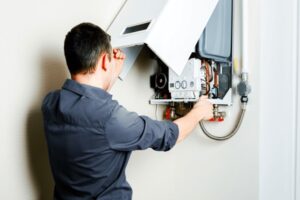

When you’re booking a boiler service, one of the first questions most people want answered is how long does a boiler service take, usually because they’re trying to work out whether they need to take time off work or whether it’s the kind of thing an engineer can knock out while they pop out for an hour. It’s a reasonable question and the answer is mostly straightforward, but there are a few things that can make a service run significantly longer than expected, and it’s worth knowing about them before your appointment.
The short version is that a standard service on a modern combi boiler takes between 45 minutes and an hour and a half. But that assumes everything goes smoothly, the boiler is reasonably accessible, and the engineer doesn’t find anything unexpected. In practice, the range is wider than most people expect, and what happens during the visit matters a lot more than the clock time alone. This guide explains what actually goes on, what extends a service, what different boiler types mean for timing, and how much you should expect to pay.
For most households with a modern gas combi boiler, a service will take around 45 minutes to 90 minutes from arrival to completion. Older boilers, system boilers, and regular boilers with additional components tend to take longer, sometimes up to two hours. If the engineer finds something that needs attention during the service, the visit will extend beyond the standard time, and additional costs may apply for any parts or extra labour.
What actually happens during a boiler service
A lot of homeowners aren’t entirely sure what a service involves. It’s not just a quick look and a signature. A Gas Safe registered engineer works through a structured checklist of checks, tests, and cleaning tasks that together give a complete picture of the boiler’s condition and safety.
The visit typically starts with a visual inspection of the boiler casing, flue terminal outside the building, and any visible pipework. The engineer is looking for signs of corrosion, damage, leaks, or anything that looks out of place before they even open the unit up. This takes five to ten minutes but occasionally turns up issues, like a flue that’s been partially blocked by a bird nest or a pipe joint showing early signs of corrosion, that affect what happens next.
With the front casing removed, the engineer checks and cleans the main internal components. The heat exchanger is inspected for scale, carbon deposits, and any signs of cracking. The burner is removed and checked for wear. The ignition electrodes are inspected and cleaned, or flagged for replacement if they’re worn. On a condensing boiler, the condensate trap and drain are checked to make sure they’re clear. The flue is inspected internally from the boiler end.
One of the most important parts of the service is the flue gas analysis. The engineer uses a calibrated analyser to check that the boiler is burning gas efficiently and that the combustion gases are at the right levels. This test tells them whether the heat exchanger is performing correctly and whether the boiler is running safely. It’s the kind of check that catches things a visual inspection alone won’t show.
After the internal checks, the engineer tests the controls, safety devices, and thermostat response. They check the system pressure and, on a combi boiler, test both the hot water and central heating outputs to confirm everything is functioning as it should. The visit wraps up with a service record being completed, either on paper or via a digital system, and any recommendations discussed with the homeowner.
How long each boiler type takes
The type of boiler you have is probably the biggest single factor in how long a service takes, and it’s something a lot of people don’t think about when they’re expecting an engineer for a quick visit.
Combi boilers are the most common type in UK homes and the quickest to service. Because they provide hot water and heating without a separate cylinder or tank, there are fewer components to check. A straightforward combi boiler service typically takes 45 minutes to 75 minutes. Newer, more accessible models at the lower end, older or more complex combi units at the higher end.
System boilers heat water through a separate hot water cylinder. The service needs to cover not just the boiler itself but also the cylinder, the pump, and the motorised valves. This adds time. Expect a system boiler service to run between 60 minutes and 90 minutes as a baseline, and longer if there are additional components to check or if the engineer identifies anything that needs attention.
Regular boilers, sometimes called conventional or heat-only boilers, are the most involved to service. They include a separate cold water tank, a hot water cylinder, and all the associated components. A thorough service on a regular boiler setup can take anywhere from 90 minutes to two hours or more, particularly in older properties where the system is more complex and components may be harder to access.
What can make a service take longer
Even with a straightforward combi boiler, certain things can push the visit well beyond the expected time. This is not a fault of the engineer. It’s just the reality of working on heating systems in real homes.
Accessibility is a bigger issue than most people realise. A boiler tucked into a tight airing cupboard with shelves packed full of towels and toiletries takes longer to work on than one mounted openly on a kitchen wall. Engineers aren’t being difficult when they ask you to clear the space beforehand. It genuinely affects how efficiently they can do the job. If the flue runs through an awkward route or the condensate connection is in an inaccessible spot, that adds time too.
Findings during the service are the most variable factor. If the engineer opens up the boiler and finds a heat exchanger clogged with scale, electrodes that are close to failing, a condensate trap that’s blocked, or a pump that sounds like it’s on the way out, they need to deal with those issues or at least document them thoroughly. A service that uncovers a blocked condensate trap and a worn electrode can easily run to two hours, plus any time spent explaining the situation and discussing whether to repair during the same visit or book a follow-up.
Age of the boiler adds time in a less obvious way. Older boilers are often harder to work on because components are stiffer, fixings are corroded, and accessing certain parts takes longer. A 15-year-old boiler can easily add 20 to 30 minutes to a service compared to a modern equivalent, just due to the physical work involved.
Combined landlord gas safety checks are common in rental properties, where the annual Gas Safety Record (CP12) and the boiler service are done in the same visit. This is efficient and sensible, but it does mean the visit naturally runs longer than a service alone, typically 90 minutes to two hours depending on the property.
How timing affects cost
How long does a boiler service take is a question that connects directly to cost, because most engineers charge a flat rate for a standard service rather than an hourly rate. That standard rate in the UK typically falls between £80 and £120 for a straightforward gas combi boiler, with London and the South East running higher, often £100 to £150.
Where timing and cost interact is when the service extends beyond what’s standard. If an engineer spends an extra 45 minutes dealing with a blocked condensate trap or cleaning a particularly dirty heat exchanger, most will charge for that additional time or for any parts used. Always ask upfront whether the quoted price covers anything found during the service or whether additional work is charged on top.
If the engineer recommends a repair during the visit, the cost depends on the component. Replacing ignition electrodes runs around £80 to £120 including parts and labour. Clearing a blocked condensate trap is usually £30 to £60 if done during the service visit. A pump replacement, if flagged during the service and booked as a follow-up job, typically costs £150 to £300. A heat exchanger replacement is one of the more expensive outcomes, often £300 to £500, and for an older boiler, it’s sometimes more economical to consider a full replacement instead.
When to leave more time than you think you’ll need
Practically speaking, if you’re booking a boiler service and trying to work out how long to allow, the safest approach is to block out a minimum of two hours regardless of what the engineer says upfront. This isn’t because services routinely take that long. It’s because you want to be there for the whole visit, to hear what the engineer found and ask questions, and not be rushing them out the door because you’ve got somewhere to be.
Most people who’ve had a service go slightly over time say the same thing: they were glad the engineer was thorough rather than quick. A service that runs to 90 minutes and catches a failing component is more valuable than one that takes 45 minutes and misses it.
Common mistakes homeowners make
The most frequent mistake is not clearing the area around the boiler before the engineer arrives. It sounds minor, but an engineer who spends ten minutes moving a vacuum cleaner, a stack of boxes, and a pile of coats before they can even open the boiler casing is an engineer whose time is being wasted unnecessarily. Clear the space the day before if possible.
Another mistake is assuming the service is just a formality and not paying attention during the visit. The engineer’s verbal feedback at the end is genuinely useful. They’ll often mention things that are worth watching, components that are ageing but still functional, or settings that could be optimised. If you’re not in the room for the end of the visit, you might miss information that would save you money later.
Some homeowners also make the mistake of booking a service without confirming the engineer is Gas Safe registered. It’s a legal requirement for anyone working on gas appliances in the UK, and it’s easy to verify on the Gas Safe Register website using the engineer’s registration number. An unregistered person servicing a gas boiler is not legal, and their work won’t be accepted as valid for warranty or insurance purposes.
Book your service in late spring or early summer. Demand is much lower from April through August, waiting times are shorter, and in some areas prices are slightly lower outside the peak autumn rush. Most engineers are fully booked by October and into November, and if a fault is found during the service that needs a follow-up repair, you’ll be waiting longer for parts and availability during the busy season.
Keep a record of your service history in a simple folder near the boiler. If the boiler develops a fault, having the previous service report on hand saves time and gives the engineer useful context. It also matters if you’re selling the property, since a documented service history is a genuine selling point for buyers concerned about the condition of the central heating system.
If you have a warranty on a newer boiler, check the small print before booking. Most manufacturer warranties require annual servicing by a Gas Safe registered engineer to remain valid. Some manufacturers also require the service to be logged on their system, so ask the engineer about this during the visit.
Read more: How much is a boiler service
How long does a boiler service take depends on a few things: the type of boiler, its age, how accessible it is, and what the engineer finds when they get inside. For most households, the honest answer is somewhere between 45 minutes and 90 minutes for a standard gas boiler service, with more complex setups running to two hours. The time is well spent. A thorough service keeps the boiler running safely and efficiently, extends its useful life, and catches problems before they turn into expensive breakdowns. It’s not the most exciting way to spend a morning, but it’s one of the more sensible ones.