
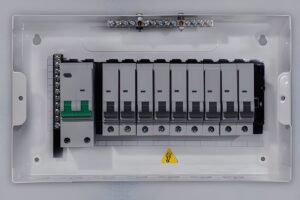

Geyser tripping earth leakage is one of those problems that tends to catch South African homeowners completely off guard, usually on a cold morning when you are already running late. You flick on the hot tap, nothing warm comes through, and when you check the DB board, the earth leakage breaker has tripped again. You reset it, it holds for a few hours, then trips again. Sound familiar?
This is not just a nuisance. A geyser repeatedly tripping your earth leakage protection device (ELPU) is a genuine electrical safety issue, and it should never be ignored or permanently bypassed. Most people only notice their geyser when it stops working, which means small faults can quietly develop for months before something forces you to pay attention. If you are in this situation right now, this guide will help you understand what is going on, what is likely causing it, and what to do about it.
Quick Answer
When your geyser keeps tripping the earth leakage, it almost always means there is current leaking somewhere it should not be. This is either because water has reached an electrical component inside the unit, the thermostat or element has failed, or the wiring connected to the geyser has deteriorated over time. The earth leakage breaker is doing exactly what it is designed to do by tripping, so the issue is not the breaker itself; it is whatever fault is causing the leakage in the first place.
Why Your Geyser Is Tripping the Earth Leakage
Water and electricity mixing
This is the most common cause and also the most serious. Geysers are pressurised tanks, and over time seals, flanges and the element gasket can weaken and allow moisture to creep into the electrical compartment. Once water makes contact with the live element or the element casing, current leaks to earth and the ELPU trips immediately. You might not see a visible drip outside the unit, but internally the damage can already be significant.
Failed or failing heating element
The heating element inside a geyser sits in direct contact with water and runs under pressure and heat every single day. Elements tend to last between 5 and 10 years depending on water quality and how often the geyser is used. When an element starts to fail, the protective coating cracks, and the electrical component inside begins to leak current. This is one of the most frequent causes of geyser tripping earth leakage in homes that have older units, and it is very often the culprit in geysers that are more than seven years old.
Thermostat problems
The thermostat sits alongside the element and controls when the geyser heats up. If the thermostat develops a fault, it can cause unusual electrical behaviour, including leakage to earth. A thermostat that has been running at too high a temperature for extended periods is more likely to fail, especially if someone has manually adjusted the temperature setting beyond what is recommended.
Deteriorated wiring
The electrical supply cable that connects the DB board to the geyser runs through ceiling spaces and often alongside pipework where moisture levels can be higher. Over years, the insulation on these cables can crack or be damaged by pests, heat, or physical wear. Exposed or degraded wiring is a less obvious cause but it does happen, particularly in older properties where original wiring has never been replaced.
Condensation or roof leaks
In some cases, the issue is not internal to the geyser at all. If your roof is leaking or if condensation is building up around the geyser installation area, water can reach the electrical connections at the top of the unit, especially around the element cover plate or the thermostat compartment. This one gets missed a lot because people assume the fault must be inside the geyser.
How to Diagnose the Problem (Safely)
Before you call anyone, there are a few safe checks you can do yourself. Do not attempt to open the electrical cover on the geyser or tamper with any wiring. The following steps simply give you useful information to pass on to a plumber or electrician.
Start by noting exactly when the earth leakage trips. If it trips immediately when reset, the fault is active and likely significant. If it trips only after the geyser has been running for a while, the fault could be heat related, pointing more toward the element or thermostat. Check the area around your geyser for any visible moisture, drips, or rust staining. Also check the ceiling below the geyser if it is installed in the roof space.
If you have another circuit on the same earth leakage breaker, isolate the geyser by switching it off at the isolator switch near the unit (if one is fitted) and then reset the ELPU. If it holds, the geyser is confirmed as the source of the fault. This step is worth doing before calling someone so you can confirm it is definitely the geyser and not another appliance on the same circuit.
When to Call a Professional
Honestly, this is not a job for DIY. Anything involving the internal wiring or components of a geyser should be done by a qualified plumber or electrician, and in South Africa, geyser installations and repairs must comply with SANS 10254. If something goes wrong and the work was not done by a certified person, your insurance claim could be rejected.
Call a professional if the geyser tripping main switch every time the geyser is switched on, if you can see water leaking near the electrical compartment, if the geyser is more than 8 years old and has never had maintenance, or if the ELPU was recently installed and suddenly started tripping when it previously held. Do not keep resetting the breaker and hoping for the best. That is usually where things go wrong.
Geyser Tripping Main Switch: Cost of Repairs
Repair costs vary quite a bit depending on what is faulty and where you are located. Here is a general breakdown to give you a realistic expectation.
Element replacement is the most common fix. A new element typically costs between R300 and R700 for the part itself, and labour adds another R500 to R900 depending on the plumber and your area. So you are looking at roughly R800 to R1600 all in for an element swap.
Thermostat replacement is usually cheaper, around R200 to R400 for the part, with similar labour costs. Combined element and thermostat replacement is often recommended if either part is showing wear, since labour is already half the cost.
Full geyser replacement becomes necessary if the tank itself is leaking or corroded, or if the unit is simply too old to repair economically. A new 150 litre electric geyser costs between R3500 and R6000 depending on brand, and installation adds R1500 to R2500 on top of that. If your unit is already giving trouble after 10 or more years, replacement is often better value than repeated repairs.
Wiring repairs depend heavily on access and the extent of the damage. Basic cable replacement might cost R800 to R1500, but if the conduit or switchboard connections also need work, costs can climb higher.
Always get at least two quotes and make sure whoever does the work issues you a certificate of compliance.
Common Mistakes Homeowners Make
The single biggest mistake is resetting the earth leakage breaker over and over without investigating the cause. People do this for weeks sometimes, and all the while the fault is getting worse. Repeatedly resetting a tripped ELPU when there is an active fault puts the system under stress and, in some cases, can damage other electrical components.
Another mistake is assuming the earth leakage breaker itself is faulty and replacing it without checking the geyser. The ELPU rarely fails on its own. Nine times out of ten, if it is tripping, there is a genuine fault elsewhere on the circuit.
Some homeowners also adjust the thermostat temperature themselves to try and fix heating issues, setting it too high. Running your geyser at above 70 degrees Celsius shortens the life of the element and thermostat significantly and can accelerate the kind of failure that causes earth leakage faults.
Prevention Tips
Geyser tripping earth leakage problems do not always appear out of nowhere. Many of them develop gradually over time, and a bit of basic maintenance goes a long way.
Get your geyser inspected every three to five years by a qualified plumber. They will check the element, thermostat, anode rod, and pressure valve, all of which affect how long the unit lasts. Make sure your geyser has a drip tray and that the overflow pipe is correctly installed and discharging somewhere visible so that any slow leak does not go unnoticed for months.
If you are in an area with hard water, your element is more likely to scale up and fail early. An element designed for hard water conditions, or the addition of a scale inhibitor, can extend its lifespan. Keep your geyser temperature set between 55 and 65 degrees Celsius. High enough to prevent bacteria growth, but not so high that you are burning through the element prematurely.
Check the area around your geyser seasonally when noticing the geyser tripping main switch, especially after heavy rain, to make sure no moisture is getting into the ceiling space.
Read more: Geyser leaking water from overflow pipe
If your geyser is tripping earth leakage, the bottom line is simple: treat it as an urgent fault, not a minor inconvenience. The earth leakage protection system in your home exists to prevent electric shock and fire, and a geyser that keeps tripping it is telling you something is genuinely wrong. In most cases, an element replacement or thermostat swap will solve it completely, and the cost is manageable.
The longer you leave it, the worse the underlying damage tends to get, and what could have been a R1200 element repair can eventually turn into a full geyser replacement. Get a qualified plumber or electrician in to assess it properly, get a written quote, and make sure you walk away with a certificate of compliance once the work is done.