
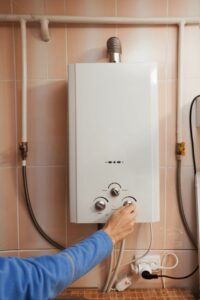

If you’ve been looking into a gas geyser price recently, you’ve probably noticed there’s a pretty wide spread. One option on the shelf costs R3,500 and another costs R12,000, and it’s not always obvious what you’re actually paying for. Most people shopping for a gas geyser are either fed up with Eskom load shedding wiping out their hot water, or they’re trying to cut down on a monthly electricity bill that’s gotten out of hand. Either way, it’s a big purchase and there’s quite a lot to think through before you hand over the money.
This guide walks you through what affects the cost, what the installation adds up to, and the mistakes people tend to make when switching over.
Quick answer
For a standard household gas geyser (16L to 20L per minute), you’re looking at between R3,500 and R8,500 for the unit itself. Installation typically adds another R2,500 to R6,000 depending on your setup and location. Budget around R6,000 to R14,000 all in for most homes, though that can go higher if your plumbing or gas connection needs serious work.
What affects the gas geyser price
The unit price isn’t the only thing that matters, but it’s where most people start, so let’s unpack it.
Flow rate (litres per minute)
This is probably the biggest factor. Gas geysers are rated by how many litres of hot water they can deliver per minute. A small unit doing 8L/min might work for a single bathroom flat, but it’ll frustrate you in a three-bedroom house with two showers and a kitchen tap all pulling at the same time.
Here’s a rough breakdown by flow rate:
A 6L/min to 10L/min unit is entry-level, usually suitable for a single bathroom or small flat. These run from about R2,800 to R4,500. A 12L/min to 16L/min unit suits most average South African homes with one or two bathrooms and costs between R4,000 and R7,000. A 20L/min unit and above is for larger homes or where multiple outlets run simultaneously. These can push R8,000 to R14,000 before installation.
Brand and build quality
Local and import brands have flooded the market, especially in the budget tier. The cheaper units can work fine, but longevity is the question. Some homeowners report the igniter or gas valve going within two to three years on no-name units. It’s not ideal, and repairs on obscure brands can be a nightmare if parts aren’t stocked locally.
Established brands with local service networks tend to cost 20 to 40 percent more, but the peace of mind is usually worth it if you’re planning to use the geyser as your primary hot water source.
Indoor vs outdoor installation
Gas geysers come in indoor (room-sealed or ventilated) and outdoor versions. Outdoor units are generally a bit simpler to install since you don’t need to worry as much about ventilation. Indoor units add complexity and sometimes cost to the installation. If your home already has gas piped in from a larger cylinder or a reticulation system, you may save on the gas connection side.
Installation costs: this is where it can catch you off guard
Most people focus on the unit price when shopping around, and then they get a plumber’s quote and realise the installation is nearly as much. That’s usually where things go wrong in terms of budget planning.
A straightforward installation where you’re replacing an existing gas geyser and the pipework is already in place can cost as little as R1,800 to R2,500 in labour. But if you’re switching from an electric geyser to gas, you’re likely looking at R3,500 to R6,000 or more depending on:
How far the gas supply point is from the geyser location matters significantly. Whether you need a new gas regulator or cylinder connection adds to the cost. Whether the existing plumbing needs adapting to the new unit’s inlet and outlet configuration is another factor. If a qualified gas installer (which is a legal requirement under South African regulations) needs to do a compliance certificate, this adds a few hundred rand but is non-negotiable.
One thing most people overlook is that a Gas Compliance Certificate is legally required for any gas installation or modification. Your installer must be registered with the Liquid Petroleum Gas Safety Association of Southern Africa (LPGSASA) or similar. If they’re not, don’t use them, regardless of how cheap the quote is. An illegal gas installation puts your household at serious risk and can void your home insurance.
Ongoing gas costs: factor this in
The gas geyser price conversation doesn’t end at installation. Gas is an ongoing expense and it’s worth understanding what it costs to run before you commit.
Most households running a 16L/min gas geyser for normal hot water use will go through a 9kg LPG cylinder roughly every four to six weeks. A 9kg cylinder costs between R280 and R380 depending on your area and supplier. For a household using hot water heavily, that could mean two or more cylinders a month.
A 48kg cylinder works out cheaper per kilogram and means fewer swaps. These typically cost R1,500 to R2,000 to fill and are a better long-term option if you have the space and your installation allows it. Some areas have piped gas reticulation through local municipalities or private networks, which can be more convenient and sometimes more economical.
Running a gas water heating system does often work out cheaper than running a large electric geyser, particularly given current electricity tariffs, but do the maths for your own household before assuming it’s always a saving.
Choosing the wrong flow rate. Undersizing is more common than you’d think. Someone hears that a 12L/min unit is the “standard” and buys it, not realising their shower head runs at 10L/min alone and they’ve got a dishwasher and basin competing for hot water. Most people only figure this out after installation, which is an expensive lesson.
Not vetting the installer. There are a lot of unregistered people offering to install gas appliances cheaply. The work might look fine, but a gas leak from an improper connection is not something you want to discover at 2am. Use a certified installer and get the compliance certificate.
Ignoring the cylinder setup. The geyser unit runs great, but the cylinder is wedged in an awkward spot, runs out constantly, and is a pain to swap. Think about accessibility and whether a larger cylinder or dual-cylinder setup makes more sense upfront.
Buying on price alone. A R3,200 gas water heater from an obscure brand might be tempting, but if you need a part in 18 months and the importer no longer stocks it, you’re back to square one.
How to choose the right unit for your home
A few practical questions help narrow things down:
How many bathrooms and hot water outlets do you have? If it’s one bathroom with a single shower, a 10L to 12L/min unit is probably fine. Two or more bathrooms with simultaneous use means you need at least 16L/min, often more.
Is this your only hot water source or a backup? If you’re running it as your primary gas geyser, invest in a reliable mid-range or above unit. If it’s purely a load shedding backup alongside an electric geyser, you might be fine with something more modest.
What gas supply do you have or can you get? LPG cylinders are the most common setup in South African homes. If you’re in an area with piped natural gas, make sure the unit you buy is compatible, as not all units work on both gas types.
Do you need indoor or outdoor installation? Outdoor is generally simpler. Indoor installation requires proper ventilation and the unit must be rated for indoor use. Your installer can advise, but factor this into your planning.
Cost summary table
| Setup | Estimated Total Cost | ||
| Small flat, 8-10L/min unit, straightforward install | R6,000 to R9,000 | ||
| Average home, 16L/min unit, basic install | R9,000 to R14,000 | ||
| Larger home, 20L/min, gas conversion from electric | R13,000 to R20,000+ | ||
| High-end unit, complex install or long gas run | R18,000 to R25,000+ |
These are rough ranges and quotes will vary by province, installer, and specific site conditions.
Read more: Gas geyser installation
Gas geyser price is really two conversations: the unit, and everything that goes with it. Plenty of homeowners get a shock when a R5,000 geyser becomes a R13,000 project by the time it’s running. That’s not necessarily a bad outcome if the setup is right for your home, but going in with realistic expectations saves a lot of frustration. Get at least two or three quotes from certified installers, make sure flow rate matches your household’s actual demand, and don’t cut corners on the gas compliance side. A properly installed gas geyser is reliable, load shedding proof, and for many South African households, genuinely more economical to run than the electric alternative.