

It is the middle of July, the sky is grey, and you step into the shower expecting warmth. Instead, cold water. Sound familiar? One of the most common questions homeowners ask before switching away from a traditional electric geyser is whether does solar geyser work in winter, or if those grey, overcast days basically make the whole thing useless. It is a fair question, and the honest answer is more nuanced than a simple yes or no. Solar geysers do work in winter, but how well they perform depends on where you live, what type of system you have, and how realistic your expectations are going in.
In South Africa, we are lucky. Even in our coldest months, most parts of the country still receive a reasonable amount of solar radiation. Places like Johannesburg, Pretoria, and the Northern Cape remain relatively sunny through winter. The Cape provinces tend to be cloudier and wetter, which is where things get a bit trickier. Either way, this guide will help you understand what to expect from your solar water heating system through the colder months, what affects performance, and how to avoid some of the common mistakes people make.
The quick answer
Yes, a solar geyser does work in winter. What changes is efficiency. On clear winter days, even when the air temperature is cold, the sun is still radiating energy and your collectors are still absorbing it. That is the key thing people misunderstand. Solar collectors do not care how cold the air feels outside. They respond to solar radiation, not air temperature. A crisp, sunny winter morning in Gauteng can actually produce excellent results. Where you run into trouble is during prolonged cloudy or rainy stretches, particularly in the Western Cape or KwaZulu-Natal during winter rainfall season.
Most modern solar water heating systems also have an electric backup element built in, precisely for those cloudy periods. So even when the sun is not cooperating, you are not going without hot water. You just pay a bit more on electricity those days.
How solar geysers actually work
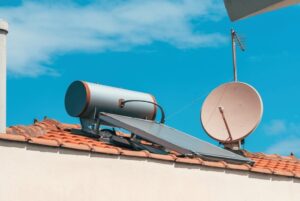
A solar geyser system has two main parts: the solar collectors on the roof and the storage tank. The collectors absorb heat from sunlight and transfer it to water, which gets stored in a well-insulated tank until you need it. There are two main collector types used in South Africa: flat plate collectors and evacuated tube collectors.
Flat plate collectors are the more common and affordable option. They work well in most of South Africa but can lose efficiency on very cold or overcast days. Evacuated tube collectors are better insulated and perform more consistently in low-light and cold conditions, which is why they tend to be recommended for areas that experience more overcast winter weather. They cost more upfront, usually between R8,000 and R15,000 for the panels alone, compared to R4,500 to R9,000 for flat plate. The total installed system cost for evacuated tubes typically ranges from R18,000 to R30,000 or more depending on tank size and installation complexity.
Most people only think about this when they are already freezing in the shower. Getting advice before installation about which collector type suits your region can save you a lot of frustration later.
What affects winter performance
A few factors make a big difference in how well your solar hot water system holds up in winter. The first and most obvious is your geographic location. Gauteng and the Limpopo region get around 8 to 9 hours of sunshine per day on average, even in winter. That is genuinely excellent solar resource. The Western Cape, however, gets much more cloud cover and rain during the winter months, which reduces daily solar gain significantly.
Collector orientation and angle also matter a lot. Panels should face north in South Africa, and the tilt angle should ideally be adjusted slightly steeper in winter to capture the lower sun angle. Many installations are done at a fixed optimal angle, which is a reasonable compromise. If yours were installed flat or facing the wrong direction, that is usually where things go wrong.
Tank insulation also plays a role. A well-insulated geyser tank will retain heat through the night, meaning morning water is still warm even though the sun has been down for hours. Older tanks or those with damaged insulation lose heat faster. Shading from trees or other buildings can reduce efficiency year-round but the impact is sharper in winter when the sun sits lower in the sky.
Hot water usage patterns matter too. A family of five using large volumes of hot water in the evenings will strain any solar system more than a couple using moderate amounts and staggering their usage. It is not ideal to expect your system to perform identically in winter as it does in summer regardless of how you use it.
The backup element: your safety net
Almost every solar geyser installed in a South African home comes with an electric backup element. This kicks in automatically when the water temperature drops below a set threshold, usually around 55 to 60 degrees Celsius. During summer, many households report the backup element barely running at all. In winter, it tends to activate more frequently, especially after several cloudy days in a row.
The good news is that even with the backup element running more in winter, most households still report notable electricity savings compared to a standard electric geyser running full-time. A standard 150-litre electric geyser can cost anywhere from R400 to R700 per month in electricity at current Eskom rates depending on usage and tariff structure. A solar geyser system in a sunny inland region might reduce that by 60 to 80 percent in summer and still achieve 30 to 50 percent savings through the colder months.
Some homeowners install a timer on the backup element to control when it runs. This is a small but practical step that can help reduce unnecessary electricity use on days when the solar gain was actually sufficient but the thermostat setting is a bit aggressive.
Frost and freezing: what to watch out for
This is the part that catches homeowners off guard, especially in the Highveld where temperatures can dip below zero at night in June and July. If your solar geyser system does not have adequate frost protection, the pipes connecting the collectors to the tank can freeze and crack. That is an expensive repair, usually costing between R2,000 and R6,000 depending on the extent of the damage and how accessible the pipework is on your roof.
Most quality systems installed in frost-prone areas include either a drain-back mechanism or an antifreeze glycol mix in the heat transfer fluid. If yours was installed without either and you are in a region that regularly sees sub-zero nights, it is worth having a plumber assess the system before winter sets in. It is a much cheaper conversation to have proactively than reactively.
Homeowners in Cape Town and coastal KwaZulu-Natal generally have less to worry about with freezing temperatures, but the Western Cape winter weather creates its own performance challenges through extended overcast periods.
Costs, payback period and what to budget for
The total cost of installing a solar water heating system in South Africa varies quite a bit depending on the type, tank size, and your home’s configuration. Here is a rough breakdown of what to expect in current market conditions.
Entry-level flat plate system (150L): R12,000 to R18,000 installed. Mid-range flat plate system (200L): R18,000 to R25,000 installed. Evacuated tube system (150L to 200L): R22,000 to R35,000 installed.
Labour typically accounts for R3,000 to R8,000 of that total. Costs go up if your roof requires special brackets, if the tank needs to be relocated, or if there are significant plumbing modifications needed. Hidden costs that catch people out include roof reinforcing for heavier tank-on-roof systems, safety valves and pressure reducers that may not be included in base quotes, and electrical work to connect the backup element.
The payback period on a solar geyser in South Africa is generally quoted at 4 to 7 years, but this depends heavily on your electricity tariff and usage. With Eskom tariffs having risen substantially in recent years, many households are finding the payback period shortening. In high-sunshine areas, payback within 4 to 5 years is realistic for a properly sized and well-installed system.
One thing most people overlook: check whether your municipality or local utility offers any rebates or incentives for solar water heater installation. Some do, and it can reduce your upfront cost by R2,000 to R5,000. It is worth a quick call before you sign anything.
Common mistakes homeowners make
The biggest mistake is choosing the wrong system for their region. A budget flat plate collector installed in the misty Cape Winelands will underperform badly in winter. If you are in a high-cloud area, either budget for evacuated tubes or go in knowing the backup element will carry more load.
Sizing the system too small is another common error. A 150-litre system for a family of five is not going to cut it, especially in winter when solar gain is reduced and the family is taking longer, warmer showers. As a rough guide, allow about 50 litres per person per day. So a family of four needs at minimum a 200-litre system, ideally 250 litres.
Not asking about frost protection is a mistake that often only reveals itself the first time temperatures drop below zero. By then you are already dealing with a repair bill. Ask the installer specifically what frost protection is included in the system.
And finally, poor installation angle. There are still installers out there who put panels up at whatever angle is convenient rather than the optimal tilt. In winter especially, the difference between a correctly angled panel and a poorly angled one can be meaningful. It is worth asking the installer what tilt angle they are using and why.
Tips to get better performance in winter
If you already have a solar geyser and want to get more out of it through the colder months, there are a few practical things worth trying. Check whether the collectors need cleaning. Dust and grime build up on the panels and reduce the amount of solar radiation they absorb. A good clean with water and a soft brush can make a noticeable difference.
Shift your main hot water use to later in the day when possible. By late afternoon, the system has had a full day to heat the water. Using large volumes first thing in the morning means the backup element has to work harder to recover.
Check that the tank is properly insulated. If you have a tank-on-roof system, make sure the insulation jacket on the tank is intact and not showing signs of damage. A compromised jacket means heat loss overnight, and you start every morning with colder water than necessary.
If you notice the backup element running constantly even on clear days, that is a sign something is not right. It could be a failing element, a scale buildup issue inside the tank, or a malfunctioning thermostat. Call a qualified plumber or solar system technician for a check rather than ignoring it.
When to call a professional
You should get a professional out if you notice any of the following: water that is consistently lukewarm even on sunny days, a backup element that runs constantly regardless of weather, visible leaks from the collector panels or pipework on the roof, water that smells or appears discoloured, or a geyser making unusual noises. A service call from a qualified solar geyser technician typically costs between R500 and R1,200 for a basic inspection and diagnosis. More involved repairs, like replacing a collector panel or relining a corroded tank, can run from R3,000 to R12,000 depending on parts and labour. It is worth getting at least two quotes for anything beyond a basic service.
Read more: Does a solar geyser use electricity
So, does solar geyser work in winter in South Africa? Yes, it does, and for most of the country it works well enough to justify the investment. The real question is not whether it works but whether your specific system is properly matched to your climate, sized correctly for your household, and installed with winter performance in mind. A well-designed solar water heating system in Gauteng or the Northern Cape will sail through winter with minimal backup electricity.
In the Western Cape you will lean on the backup element more during peak winter, but you will still be saving compared to a purely electric setup across the year. The solar geyser is not a perfect solution, and it will not make your electricity bill disappear overnight. But as a long-term investment in a country with abundant sunshine and rising energy costs, it holds up well even when the temperatures drop.