
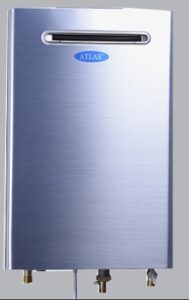

There’s a particular kind of frustration that comes with a gas geyser that suddenly stops working. You bought it specifically so you’d have hot water independent of load shedding, and now the one thing that was supposed to be reliable has let you down. If you’re looking into Atlas gas geyser repair, the chances are good that you’re either staring at a unit that won’t ignite, one that lights and immediately cuts out, or one that’s heating inconsistently and making your showers a miserable guessing game.
Atlas is a well-known brand in South Africa’s gas appliance market, and their geysers are widely installed in homes across the country. The upside of that is that parts are generally available and most experienced gas technicians have worked on them before. The downside is that, like any mechanical device that deals with gas, heat, and water simultaneously, things do go wrong eventually. This guide helps you understand what typically fails, what you can safely check yourself, and what Atlas gas geyser repair is likely to cost you in South Africa.
Most Atlas gas geyser repairs come down to one of four things: a failed thermocouple or flame sensor, a faulty igniter or dead batteries, a blocked or worn gas valve, or a scale-affected heat exchanger. Some of these are simple and inexpensive fixes. Others require a registered gas technician and can run into a few thousand rand. Before calling anyone out, there are a handful of basic checks worth doing first.
What commonly fails and why
Igniter and battery failure
This is where most repair journeys start. The unit won’t light, there’s either a weak clicking sound or nothing at all, and the assumption is that something serious has broken. Very often it’s just the batteries. Atlas gas geysers that use electronic ignition are typically powered by AA or D-cell batteries that sit in a small compartment on the unit. These batteries power the spark that lights the burner, and when they fade, the ignition stops working. It sounds almost too simple, but replacing the batteries is the first thing to try before anything else.
If fresh batteries don’t fix it, the igniter electrode itself might be dirty or damaged. Carbon deposits from combustion can build up on the tip of the electrode over time and prevent a clean spark. A visual inspection after removing the front cover will often show this clearly. A dirty electrode can sometimes be cleaned with a dry, soft brush. A cracked or corroded one needs replacing, which is a relatively minor repair.
Thermocouple and flame sensor failure
This is probably the single most common repair on any gas geyser, not just Atlas units. The thermocouple is a safety device that detects whether the burner flame is present. If it doesn’t sense the flame, it shuts off the gas supply to prevent unburned gas from accumulating. When the thermocouple starts to fail, the unit often lights briefly and then shuts down within a few seconds, which is exactly the symptom that sends most people searching for information.
A thermocouple can fail through general wear over time, or it can become misaligned so that it’s not properly in the path of the flame. Both scenarios produce the same symptom. This is not something to attempt to diagnose yourself beyond confirming the symptom, because testing it properly requires equipment a gas technician carries. The good news is it’s one of the cheaper repairs on the list.
Gas valve issues
The gas valve controls how much fuel reaches the burner and modulates based on demand. A gas valve that’s sticking, partially blocked, or failing internally can cause a range of symptoms: the unit may not light at all, may produce a weak or unstable flame, may heat water to an inconsistent temperature, or may simply not respond when the hot tap is opened.
Gas valve problems are firmly in the “do not attempt yourself” category. Interfering with the gas valve without proper training and the correct tools creates a genuinely dangerous situation. A qualified gas technician can test the valve and determine whether it needs cleaning, adjustment, or full replacement.
Heat exchanger scaling and blockage
South Africa has areas with notably hard water, and hard water and heat exchangers don’t get along well over time. Mineral deposits build up inside the heat exchanger, reducing its ability to transfer heat efficiently. The symptom is usually a progressive decline in water temperature, eventually reaching a point where the water barely gets warm regardless of the burner running at full capacity.
A partially scaled heat exchanger can sometimes be descaled by flushing with an appropriate solution. A severely scaled or cracked heat exchanger usually needs replacement, which is one of the more expensive repairs on any gas unit.
Water leaks from connections or the unit body
Minor leaks at the inlet or outlet connections are usually the result of a loose fitting or a degraded washer. These are visible, accessible, and repairable by a plumber or technician. Leaks from inside the unit body, particularly from the heat exchanger, are more serious and the unit should be turned off until a technician has assessed it.
What you can safely check yourself
Before booking a callout, work through these checks in order. They cost nothing and can save you the callout fee.
Verify the gas supply first. Open the cylinder valve fully, confirm the regulator is properly seated, and check that the connecting hose isn’t kinked or damaged. If you have a spare cylinder available, swapping it over rules out an empty or low cylinder immediately.
Replace the batteries even if you think they’re still fine. Battery-powered ignition on gas geysers can fail before a battery tester shows a problem, because the spark requires a strong burst of power that a slightly depleted battery can’t reliably supply.
Check your water pressure by running cold water at the same outlet. Low water pressure can prevent the flow sensor in the geyser from triggering the gas valve to open. If pressure seems low, check whether the inlet filter screen on the cold water connection to the geyser is partially blocked. This small mesh screen can be unscrewed and rinsed clean.
Look at the burner flame colour if the unit does light. A strong blue flame is normal. An orange or yellow flame indicates incomplete combustion, which can produce carbon monoxide. This is a safety issue and the unit should be switched off and a technician called. This is not a situation to run the geyser through while waiting for an appointment.
Try a reset. Turn the unit off completely, wait thirty seconds, and restart. Some Atlas models have a reset button that trips during an overheat event. If the unit shut down due to a thermal cutout, a reset can restore normal operation.
When Atlas gas geyser repair needs a professional
The following situations should not be handled as DIY projects:
Any smell of gas near the unit during or after operation means the unit should be switched off at the cylinder immediately and a registered technician called before the unit is used again.
If the ignition issue persists after new batteries and a visual electrode inspection, the internal components need proper testing.
Any issue involving the gas valve, burner assembly, or heat exchanger needs a technician. These are the core gas-side components and require both the expertise and tools to work on safely.
If the unit is producing an abnormal flame colour, as mentioned above, this is urgent.
If you have any doubt about whether you’ve correctly identified the problem, rather book the callout. A misdiagnosis that leads to an unsafe repair is far more costly than a technician’s call-out fee.
In South Africa, gas appliance work must be performed by a technician registered with the Liquid Petroleum Gas Safety Association of Southern Africa (LPGSASA) or an equivalent body. A compliance certificate is required after any significant gas repair or component replacement. If your technician doesn’t offer this, find one who does.
What Atlas gas geyser repair costs in South Africa
Here’s a realistic breakdown of what you can expect to pay across most South African metros. Prices vary by province and installer, so treat these as useful benchmarks rather than fixed quotes.
Call-out and diagnosis fee: R450 to R900 depending on your area and the technician. This covers the visit and assessment but generally not parts or additional labour.
Battery replacement (done by technician): R150 to R350 including new batteries and labour, though this is something you can do yourself for the cost of the batteries alone.
Igniter electrode replacement: The part costs R80 to R280. With labour, expect R400 to R800 for the complete repair.
Thermocouple or flame sensor replacement: One of the most common Atlas gas geyser repairs. The part itself is R120 to R380 depending on the model. Total repair cost including labour typically sits between R600 and R1,300.
Gas valve replacement: The part ranges from R900 to R2,200 for most Atlas models. With labour and any additional fittings needed, total cost is R1,600 to R3,500. This is where the repair-versus-replace conversation starts to become relevant.
Heat exchanger descaling: Labour-intensive and costs R900 to R1,600 depending on severity and time taken.
Heat exchanger replacement: The component itself can run R1,500 to R4,500. Total repair cost including labour can reach R3,000 to R6,000. At this point, comparing against the cost of a new unit is a sensible exercise.
Compliance certificate: R400 to R800, required after gas-side repairs.
New Atlas geyser unit (comparable spec): R4,000 to R9,000 depending on flow rate, plus R2,500 to R5,000 for installation and certification. If your existing unit is more than eight to ten years old and facing a repair bill over R3,000, replacement is often worth at least getting a quote on.
Common mistakes people make during repairs
Calling a standard plumber for a gas repair is still one of the most common errors. Gas appliances require a registered gas installer, which is a separate certification from general plumbing. Some plumbers hold both, but always confirm before booking.
Continuing to use a unit that’s showing warning signs because the repair “can wait.” A flickering flame, intermittent ignition, or unusual smells are the unit communicating that something isn’t right. Leaving these unaddressed doesn’t usually save money; it typically means a bigger problem later.
Sourcing parts independently and asking a technician to install them without confirming compatibility first. Atlas has produced multiple models over the years and not all parts are interchangeable between them. A technician who sources the part themselves will confirm it’s the right one before fitting it.
Prevention tips to reduce repair frequency
Have the unit serviced every two to three years by a registered gas technician. A standard service covers cleaning the burner and electrode, testing the flame sensor and thermocouple, checking gas connections for wear, and confirming water connections are sound. It typically costs R600 to R1,200 and extends the useful life of the unit significantly.
Replace the gas hose connecting your cylinder to the unit every five years regardless of visible condition. LPG hoses degrade from the inside out and a hose that looks fine externally can be compromised internally.
Keep the area around the unit clear, especially for outdoor installations. Debris, dust, and insects can find their way into the burner area and cause ignition problems.
In hard water areas, ask your technician about descaling intervals during servicing. Catching mineral buildup early is far cheaper than replacing a heat exchanger.
Read more: Atlas gas geyser problems
Atlas gas geyser repair covers a pretty wide range of scenarios, from a straightforward battery swap that takes five minutes to a heat exchanger replacement that costs nearly as much as a new unit. The honest approach is to start with the simple checks, rule out the easy causes, and then make an informed decision about whether the repair cost is justified given the unit’s age and condition.
Most Atlas gas geysers, when properly maintained and repaired by a registered technician, will give many years of reliable service. The key is not leaving problems to escalate and making sure the work is done legally and safely.