

It’s a question that comes up more often than you’d expect, and it’s a reasonable one to ask. Can a gas geyser burst? The short answer is that a gas geyser doesn’t burst the way an electric storage geyser does, but that doesn’t mean it’s without risk. Gas geysers carry their own set of hazards that are arguably more serious if things go wrong, just different in nature. Understanding the difference matters because the precautions you take and the warning signs you watch for are not the same as with an electric unit.
In South Africa, electric geyser bursts are a well-known problem. You’ve probably heard of someone coming home to a flooded ceiling, warped boards, and a damaged geyser that gave no warning before going. Gas geysers work completely differently, so the burst risk as people understand it from electric geysers doesn’t apply in the same way. But gas geysers do carry a real risk of explosion and fire if they’re improperly installed, poorly maintained, or if components fail without being addressed. This guide explains exactly what the risks are, what causes them, and what South African homeowners should be doing about it.
Quick answer
A gas geyser cannot burst in the same way as an electric storage geyser because it has no pressurised hot water tank. However, gas geysers can explode or cause fires if there is a gas leak, if combustion becomes abnormal, or if the unit is installed improperly. The risk is real but preventable with proper installation, regular maintenance, and knowing the warning signs.
Why electric geysers burst but gas geysers work differently
To understand why the burst question comes up, it helps to know how each type of unit actually works.
A conventional electric geyser is a storage tank that holds anywhere from 100 to 250 litres of water under pressure and heats it continuously. If the pressure relief valve fails and the thermostat also malfunctions, pressure inside the tank can build to the point of rupture. This is what people mean when they say a geyser burst. The result is a sudden release of pressurised water, typically into the ceiling void, causing significant water damage and in extreme cases structural issues.
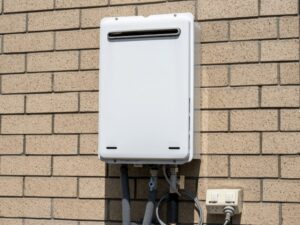
A gas geyser is an instantaneous system with no storage tank. Cold water flows through a heat exchanger, gets heated by a gas burner, and exits as hot water. There is no tank, no stored water under pressure, and therefore no tank to rupture. So the classic electric geyser burst scenario simply doesn’t apply.
What gas geysers can do instead, and this is where the danger is, is leak gas and either cause a fire or an explosion if ignition happens in the wrong place, produce carbon monoxide from incomplete combustion, or overheat internal components if safety systems fail. These are different risks, but they are serious ones and in some ways more immediately dangerous than a water leak.
What actually puts a gas geyser at risk of explosion or fire
Gas leaks from connections or components
This is the primary explosion risk with any gas appliance. Gas leaks most commonly occur at the connection between the gas hose and the cylinder regulator, at the connection between the gas line and the geyser unit itself, from a deteriorated or cracked gas hose, or from internal component failure such as a faulty gas valve that doesn’t fully close when the unit is off.
LPG is heavier than air, which means a leak accumulates at floor level rather than dissipating upward. In an enclosed space, this creates a highly flammable atmosphere that can ignite from a spark, a cigarette lighter, or even a static discharge. This is not a slow-developing problem. A significant gas leak in an enclosed space can create an explosive atmosphere relatively quickly.
Improper installation
A large proportion of gas-related incidents in South African homes trace back to installation that didn’t follow the correct regulations. This includes gas lines that weren’t pressure-tested, connections made with incorrect fittings or materials, indoor installations without adequate ventilation, units positioned too close to combustible materials, and regulators that are mismatched to the unit’s gas pressure requirements.
The legal requirement in South Africa for a Gas Compliance Certificate from a LPGSASA-registered installer exists precisely because of the consequences of bad installation. An unregistered installer who does substandard work and doesn’t pressure-test the connections leaves a household at genuine risk, sometimes without any visible warning signs until something ignites.
Abnormal combustion and carbon monoxide
Carbon monoxide is the risk that doesn’t announce itself. It’s produced when gas burns incompletely, which happens when there isn’t enough oxygen reaching the burner. Symptoms include a yellow or orange burner flame instead of the normal blue, sooting on the unit exterior, and a smell of exhaust in the area around the geyser.
Unlike an explosion, carbon monoxide poisoning develops silently. People feel unwell and may attribute it to illness before the real cause is identified. For indoor gas geyser installations in particular, this is a serious concern if ventilation is inadequate. Most people don’t realise that an outdoor-rated gas geyser fitted indoors without proper ventilation can create carbon monoxide conditions inside the home.
Overheating from flow or sensor failure
Gas geysers have thermal cutoff devices that shut the burner down if the heat exchanger reaches a dangerous temperature. If this safety device fails at the same time as the flow sensor or gas valve malfunctions, the heat exchanger can overheat significantly. In extreme cases this can damage seals and connections, and potentially start a fire if the unit is near combustible materials.
This scenario is rare in properly installed and maintained units, but it’s more likely in older units that haven’t been serviced and where multiple components are wearing simultaneously.
Deteriorated gas hose
LPG hoses have a recommended service life of five years. After that, the rubber compound begins to degrade internally, even if the hose looks fine from the outside. A deteriorated hose can develop small cracks that allow slow gas leaks, or can fail more suddenly under the normal pressure of gas delivery. Hose replacement is one of the most overlooked aspects of gas geyser maintenance.
Warning signs to take seriously
These signs should never be ignored or left to monitor for a few more days:
A smell of gas near the unit at any time, whether the geyser is on or off, means you should close the cylinder valve immediately, open windows if the area is enclosed, leave the space, and call a registered gas technician before using the unit again. Do not switch any electrical appliances on or off in the area, as a spark could be enough to ignite an accumulated gas atmosphere.
A yellow or orange burner flame instead of blue is a combustion problem producing carbon monoxide. Switch the unit off and call a technician.
Sooting or black marks appearing on the outside of the unit indicate incomplete combustion and the same carbon monoxide risk.
A unit that keeps shutting itself off for no apparent reason is detecting something abnormal through its safety sensors. This isn’t a nuisance; it’s the unit doing its job. Don’t keep resetting it without investigating the cause.
Any visible damage to the gas hose, including cracking, kinking, or brittleness, means the hose needs immediate replacement before the unit is used again.
When to call a professional immediately
Call a registered gas technician without delay if you smell gas anywhere in or around the property and cannot locate an obviously open valve as the cause.
Call immediately if the burner flame is abnormal in colour or if there is visible sooting on the unit.
Call if the unit is making unusual sounds during operation, particularly hissing near connections or a loud delayed bang on ignition, which can indicate gas accumulating in the burner before ignition fires.
Call if you or anyone in the household is experiencing unexplained headaches, nausea, or dizziness and a gas appliance is in use. These can be symptoms of low-level carbon monoxide exposure.
In all of these situations, don’t wait for a convenient time to book. The risks associated with gas are fast-moving compared to a water leak.
Cost of addressing gas geyser risks in South Africa
Gas hose replacement: A standard LPG connecting hose costs R180 to R450. Fitting by a technician adds R200 to R400. Total replacement typically costs R400 to R850 and should happen every five years regardless of visible condition.
Regulator replacement: Regulators degrade over time and can deliver inconsistent pressure as they age. A replacement regulator costs R250 to R600, with fitting adding R200 to R350.
Gas leak testing and repair: A registered technician will pressure-test the gas installation and identify any leak points. A callout and leak test costs R500 to R950. Repairing a faulty connection or fitting adds R300 to R800 depending on what needs replacing.
Gas valve replacement: If the valve isn’t sealing fully when closed, it needs replacement. Parts cost R900 to R2,200 for most residential models, with total repair including labour sitting between R1,600 and R3,500.
Full unit replacement: If the unit is old, has had multiple component failures, or was poorly installed from the start, replacement may be the safer and more cost-effective path. A replacement gas geyser (mid-range 16L/min unit) costs R5,000 to R9,000, with installation and compliance certification adding R2,500 to R5,500.
Carbon monoxide detector: A good quality CO detector suitable for indoor gas appliance monitoring costs R350 to R900 at most hardware retailers in South Africa. If you have an indoor gas installation or if anyone in the household uses gas in any enclosed space, this is money well spent. Most people don’t have one and they should.
Common mistakes homeowners make
Using an unregistered installer to save money is the single most common mistake and the one with the most serious potential consequences. A non-compliant gas installation with no pressure testing and no compliance certificate is a genuine safety hazard. The R500 to R1,000 saved on installation is not worth it.
Not replacing the gas hose on schedule. Five years sounds like a long time but gas hoses deteriorate. Many households are running ten-year-old hoses that have never been replaced because they look fine externally. They are not necessarily fine internally.
Ignoring intermittent warning signs because the unit “mostly works fine.” A gas geyser that occasionally shuts itself off, produces an odd smell, or makes unusual sounds is communicating a problem. These signs don’t resolve on their own.
Installing an outdoor-rated unit indoors without proper ventilation. This is more common than it should be and creates a real carbon monoxide risk in the home.
Prevention tips for South African homeowners
Have the unit and all gas connections inspected and serviced every two to three years by a LPGSASA-registered technician. A proper service checks for gas leaks, tests all safety components, cleans the burner, and identifies wear before it becomes a hazard. Typical service cost is R600 to R1,200.
Replace the LPG connecting hose every five years without waiting for it to show visible wear.
Install a carbon monoxide detector in any room where a gas appliance is used or where the gas line runs through an enclosed space. Check and replace the battery annually.
Keep the area around the unit clear of combustible materials, particularly for wall-mounted indoor installations. Maintain the clearances specified in the installation manual.
Know where your cylinder valve is and how to close it quickly. In the event of a suspected gas leak, being able to shut off the supply immediately while keeping yourself calm can make a significant difference to the outcome.
Read more: Best gas geyser South Africa
Can a gas geyser burst the way an electric one does? No, because there’s no pressurised tank to rupture. But the risks that do exist with gas geysers are serious enough that treating them casually is a mistake. Gas leaks, carbon monoxide from poor combustion, and fire from improper installation are all real scenarios that happen in South African homes.
The good news is that a properly installed, regularly maintained gas geyser with compliant connections and a functioning safety system is genuinely safe to use. The risk is almost always traced back to corners cut during installation, maintenance that never happened, or warning signs that were ignored. Take those three things seriously and a gas geyser is a reliable, load shedding independent hot water solution that serves a household well for many years.