
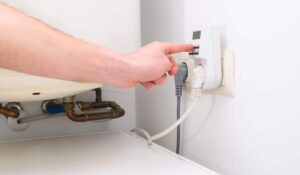

Knowing how to set geyser timer correctly is one of those small practical skills that makes a noticeable difference to your electricity bill every single month, yet most South African homeowners who have one either leave it on a schedule that made sense when it was first installed years ago or have never adjusted it from the factory setting at all. A geyser timer only works well if the schedule actually matches your household’s real-life routine, and that is something worth spending twenty minutes getting right rather than assuming it is fine.
This guide walks through the full process: understanding what the timer is doing, the different types of timers you might have installed, how to programme each type correctly, what schedule actually makes sense for a typical South African household, and the mistakes that reduce or eliminate the saving most people are hoping for. If you have just had a timer fitted, have moved into a home that already has one, or have been meaning to adjust yours for a while, this should cover everything you need.
A geyser timer cuts power to the heating element during hours when hot water is not needed, preventing unnecessary heating cycles overnight or during the middle of the day. To set it correctly, you need to identify two or three daily periods when your household actually uses hot water and programme the timer to switch on roughly 45 to 60 minutes before each of those periods. The geyser stays off the rest of the time. Most mechanical dial timers are set by pushing in or pulling out tabs around a 24-hour dial. Digital timers use button combinations. Smart controllers use an app. The specifics vary by model but the logic is the same across all types.
Understanding what the timer is actually doing
Before getting into how to programme the device, it helps to understand why the schedule matters.
Your electric geyser maintains water at a set temperature, typically 60 degrees Celsius, by cycling the element on and off throughout the day and night. Without a timer, this happens continuously. The element runs whenever the thermostat detects that water temperature has dropped below the trigger point. Overnight, when nobody is using hot water, the tank gradually cools and the element keeps cycling to compensate for standby heat loss. This costs electricity that produces no practical benefit for anyone in the house.
A timer stops the element from running during those off-peak periods entirely. The water cools more than it would with continuous power, but a well-insulated tank loses heat slowly enough that this is not a problem in practice. When the timer switches power back on ahead of your morning routine, the element runs a single heating cycle to bring the tank back up to temperature. That cycle uses roughly the same energy as the multiple short cycles that would have occurred overnight without the timer, but it happens once rather than spread across eight hours of unnecessary activity.
The key number to remember is that the element needs roughly 45 minutes to an hour to bring a tank from its overnight temperature back up to a comfortable hot water temperature. This recovery time is what most people underestimate when first programming their timer.
Types of geyser timers and how to identify yours
The programming process differs depending on which type of timer is installed. Most South African homes have one of three common types.
Mechanical dial timer: This is the most common type installed in South African homes. It is a round device, typically mounted in a metal or plastic box near the geyser or on the DB board circuit. The face is a 24-hour clock dial with small plastic tabs or pegs around the edge. Each tab represents a 15 or 30 minute interval. Tabs that are pushed in or folded down indicate the geyser is on for that period. Tabs that are pulled out or standing up indicate the geyser is off. There is usually a central dial that rotates to show the current time, and a manual override switch that lets you force the geyser on regardless of the timer setting.
Digital programmable timer: This type has a small LCD screen and a set of buttons for programming. It allows more precise scheduling than the mechanical dial, can handle multiple on and off events per day, and on better models allows different schedules for weekdays versus weekends. The programming interface varies by manufacturer but typically involves a combination of a clock button, a programme or timer button, and navigation buttons to set times.
Smart geyser controller: This connects to your home Wi-Fi and is controlled through a smartphone app. The programming is done entirely in the app, which typically offers a visual interface to set schedules, allows remote adjustments, and on some models shows energy usage data. If you have one of these, the app will guide you through the setup and the manufacturer’s support line can assist if you get stuck.
If you are not sure which type you have, look at the device. A round dial with small tabs is mechanical. A flat device with a screen and buttons is digital. A device with indicator lights and a small antenna, or one that came with a phone app, is a smart controller.
How to set a mechanical dial timer
This is the most common type and the one most people need help with after installation or after the tabs have been accidentally knocked out of position.
Step one is to set the current time. The central part of the dial rotates. Turn it until the arrow or marker aligns with the current time on the outer ring. Most dials run clockwise and are marked in 15 or 30 minute increments over a full 24-hour cycle.
Step two is to clear any existing programme. Go around the dial and pull all tabs to the same position, either all in or all out, so you are starting fresh. Check the instructions or the label on the device to confirm which position means on and which means off. On most South African mechanical timers, tabs pushed inward represent the on period.
Step three is to set your desired on and off periods. Push in the tabs for the hours you want the geyser to be powered on. If you want the geyser on from 4:30am to 8:00am, push in all the tabs covering that window. Repeat for any evening period, for example 4:30pm to 10:00pm. Leave the overnight tabs pulled out so the geyser is off from 10pm to 4:30am.
Step four is to check the manual override switch. Most mechanical timers have a small lever or switch with three positions: auto, on, and off. Set it to auto so the timer controls the geyser. The on and off positions override the timer completely and should only be used temporarily when you need to force the geyser on during an unscheduled period.
That is the complete process. It takes about five minutes once you understand what the tabs are doing.
How to set a digital programmable timer
Digital timers vary more than mechanical ones because different manufacturers use different button combinations. The general process is as follows, but check the booklet that came with your device if the buttons are labelled differently.
First, set the current time and day. Hold the clock button and use the navigation buttons to set the correct day, hour, and minute. Confirm and release.
Next, enter programming mode. Press the programme or timer button. The display will show a programme slot such as P1 or Event 1. Use the navigation buttons to set the on time for this first programme. Confirm, then set the corresponding off time. Confirm again. Move to the next programme slot and repeat for your second on and off window.
Most digital timers allow between four and eight programme events per day. For a typical South African household with a morning and evening schedule, you only need four slots: morning on, morning off, evening on, and evening off.
If the device allows weekday and weekend separation, use that feature. Most households have different hot water usage patterns on weekends and setting an identical schedule for all seven days is less efficient than accounting for that difference.
After programming, switch the device to auto mode and confirm the current time is still showing correctly. Some digital timers lose their programme if the power goes out. If your area experiences frequent load shedding, check whether your timer has battery backup for the clock, and if not, make a habit of verifying the programme after outages.
What schedule actually makes sense for your household
This is where most people either get excellent results or completely undermine the point of having a timer. The schedule should reflect your actual hot water usage, not an idealized version of it.
A common and effective schedule for a typical South African working household looks like this: switch on at 4:30am, switch off at 8:30am once the morning showers and breakfast are done, switch on again at 4:30pm ahead of the afternoon and evening, and switch off at 10pm after the last shower and dishes. The geyser is off for the full overnight period from 10pm to 4:30am.
If your household wakes up later, adjust the morning switch-on accordingly, but always maintain that 45 to 60 minute lead time before the first shower. That recovery time is not optional. A geyser that switches on at 6:00am when the first shower is at 6:15am will produce lukewarm water for the first person and cold water for the second. This is the most common reason people abandon their timer in frustration within the first week of use.
For households with children who bath in the evening, make sure the evening on period covers that time. If someone regularly comes home late and needs a shower after 10pm, either extend the evening off time or use the manual override for those occasions rather than keeping the geyser on all night.
Common mistakes when setting or using a geyser timer
Setting the switch-on time too close to when hot water is needed is the single most common error and the one most likely to result in the timer being bypassed or removed. The fix is simply to move the switch-on time earlier by 45 minutes and the problem resolves without any other changes.
Not adjusting for load shedding is a frustration that catches people off guard. If your area has a regular load shedding schedule and the geyser was off from 10pm to 4:30am and then there was a two-hour outage from 4am to 6am, the tank will be significantly cooler than usual by the time you need the morning shower. On load shedding days, switching the timer to manual on for a longer morning period compensates for this. It is an inconvenience, not a fault, and managing it manually on affected days is the practical approach.
Leaving the programme unchanged for years without reviewing whether it still suits the household is something most people do without realising. Schedules that made sense when there were two adults working standard hours look different after a baby arrives, a teenager starts waking up at noon, or someone starts working from home. Reviewing the timer schedule every few months takes five minutes and keeps the saving relevant to your actual life.
Not pairing the timer with a geyser blanket reduces the effectiveness of the timer. During the off period overnight, a well-insulated tank retains heat far better than an uninsulated one. This means the element has less work to do when it switches on in the morning, the recovery cycle is shorter, and the overall saving is greater. A blanket costs R350 to R600 and makes the timer more effective. The two work together and are worth fitting at the same time.
What a timer installation costs if you do not have one yet
If you are reading this because you are considering getting a timer fitted rather than because you already have one, here is a straightforward cost overview.
A mechanical dial timer costs R400 to R800 for the unit. A digital programmable timer costs R700 to R1,500. A smart controller costs R1,500 to R4,000. Installation by a registered electrician adds R500 to R1,000 in labour for a standard job. Total installed cost for a mechanical or digital timer typically falls between R900 and R2,500 depending on the type and your location.
Monthly electricity savings for an average South African family home typically range from R80 to R300 depending on current usage patterns and tariff rates. A R1,500 installed timer that saves R150 per month covers its cost in ten months. After that the saving continues for the life of the device, which in most cases is many years.
The smart controller is the right choice if you want to manage the schedule remotely, track usage, or adjust settings on days when load shedding disrupts the normal programme. For a household that just wants a basic reliable schedule and straightforward programming, the mechanical or digital type is more than adequate.
Read more: How long does a geyser take to heat up
Knowing how to set geyser timer correctly is genuinely one of the most practical things a South African homeowner can do to reduce electricity costs without any major investment or disruption. The programming itself takes less than ten minutes once you understand your device, and getting the schedule right means the difference between a timer that works smoothly in the background and one that gets overridden and switched off after a week of cold showers.
Take the time to match the schedule to your actual routine, give the geyser enough lead time to heat up before you need hot water, and review it occasionally as your household’s habits change. That is really all there is to it.