

Running a geyser with solar panels is one of the more practical decisions a South African homeowner can make right now. With electricity costs climbing every year and load shedding still part of daily life, the idea of using sunlight to heat your water instead of Eskom power is genuinely appealing. And unlike some home upgrades that promise a lot and deliver little, solar water heating has a solid track record. Most people who’ve made the switch say the savings are real and the system runs quietly in the background without much fuss.
That said, there’s a fair amount of confusion about what “solar panels for a geyser” actually means in practice. Some people picture photovoltaic (PV) panels connected to their existing electric geyser. Others are thinking of dedicated solar thermal collectors. These are two very different setups with different costs, different efficiency levels, and different things that can go wrong. Getting this distinction right from the start will save you a lot of time and money. This guide covers both options, what you’ll pay in South Africa, and how to decide which approach makes sense for your specific situation.
There are two main ways to run a geyser with solar panels. The first is a solar thermal system, where dedicated collectors on your roof heat water directly or through a heat-transfer fluid. The second is using photovoltaic (PV) solar panels to generate electricity that then powers your existing or new electric geyser. Both work. The right choice depends on your budget, existing setup, and whether you already have or plan to install a PV solar system on your home.
What each system actually involves
Understanding the difference between these two approaches is important before you spend anything.
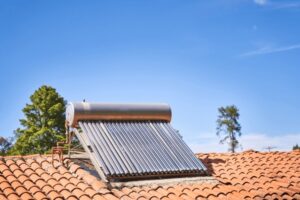
Solar thermal systems use collectors mounted on your roof to absorb heat from the sun. That heat transfers to water stored in a tank, either directly or through a closed-loop system with a heat-transfer fluid. The water gets hot without using any electricity at all during sunny periods. A backup electrical element handles the days when there isn’t enough sun. This is what most people traditionally mean when they talk about a solar geyser. It’s a self-contained water heating system where sunlight does most of the work.
PV-powered geyser systems work differently. You install photovoltaic solar panels, and the electricity they generate is used to power a standard electric geyser (or a purpose-built immersion element). Some setups use a dedicated controller called a geyser controller or solar diverter that sends excess PV electricity to the geyser instead of letting it go to waste. This approach is increasingly popular among homeowners who already have a PV system installed and want to make better use of it during the day.
Both approaches genuinely reduce your electricity bill. They just do it through different mechanisms, and the costs involved are quite different.
Types and options explained
Within these two main categories, there are a few more decisions to make.
Flat plate solar thermal collectors are the most common and most affordable type. They’re metal panels with a dark absorber surface, typically mounted at an angle on your roof. They work well across most of South Africa. A complete flat plate system installed usually costs between R10,000 and R22,000 depending on tank size and installation complexity.
Evacuated tube collectors are more efficient, particularly in areas with less consistent sun or colder winters like parts of the Highveld. They consist of rows of glass tubes and handle diffuse light better than flat plates. The downside is cost. Expect to pay R18,000 to R40,000 or more for a fully installed evacuated tube system.
PV diverter or geyser controller systems sit on top of an existing PV installation. If you already have solar panels on your roof, a geyser controller can redirect surplus electricity to heat your water during the day instead of exporting it to the grid at a low rate. The controller itself costs R2,000 to R6,000, and installation is relatively straightforward. This is one of the more cost-effective options if the PV system is already there.
Dedicated PV-to-geyser setups where panels are installed specifically to power the geyser are less common because the economics are less attractive than solar thermal. You’d be buying PV panels (R8,000 to R20,000+ depending on capacity) plus an inverter or controller, just to power an element that a thermal system would handle more directly and cheaply.
Cost breakdown for South African homes
Here’s a realistic look at what you’ll spend across the different options.
Solar thermal flat plate system (complete, installed):
- 100 to 150 litre system: R10,000 to R16,000
- 150 to 200 litre system: R15,000 to R22,000
- 200+ litre or premium brands: R20,000 to R35,000
Solar thermal evacuated tube system (complete, installed):
- 150 litre system: R18,000 to R28,000
- 200 litre system: R25,000 to R40,000
- Large household systems: R35,000 to R55,000+
PV geyser controller added to existing PV system:
- Controller unit: R2,000 to R6,000
- Installation: R1,500 to R3,500
- Total: R3,500 to R9,500 (no new panels needed)
Hidden costs that often catch people off guard:
- SANS 10106 compliance certificate: R500 to R1,500
- Electrical work for backup element wiring: R800 to R2,500
- Roof structural reinforcement if needed: R1,500 to R5,000
- Plumbing modifications or pipe replacement: R500 to R3,000
- Old geyser removal and disposal: R500 to R1,500
A realistic all-in budget for a mid-range solar thermal installation for a family of three to four people is between R20,000 and R30,000. It’s a meaningful amount of money, and it’s not ideal that so many homeowners get a quote, see the equipment cost, and then get surprised when the final invoice is substantially higher due to these extras.
How the installation process works
For a solar thermal system, the process typically takes one to two days. An installer will assess your roof orientation and condition, size the system to your household’s hot water demand, and then mount the collector panels, install or connect the storage tank, and run the connecting pipework. The backup electrical element gets wired in and a thermostat or controller is set up to manage when it cuts in.
For a PV diverter setup, it’s simpler. The installer fits a controller unit that monitors your PV output and automatically redirects excess power to the geyser element. Setup takes a few hours in most cases.
After any installation, the system should be pressure-tested, commissioned properly, and registered with your municipality if required. Some municipalities in South Africa require notification or approval for solar water heater installations, particularly in areas with specific by-laws. Skipping this step can create complications with home insurance claims down the line.
Common mistakes people make
Assuming a geyser with solar panels means zero electricity use. It doesn’t, or at least not entirely. On overcast days or during winter in places like Johannesburg and Pretoria, the backup element will cut in. Most systems are designed this way deliberately so you’re never left without hot water. The goal is to reduce electricity use significantly, not eliminate it entirely.
Getting a system that’s too small. A 100-litre system for a household of four is going to struggle. People sometimes size down to save money and then find the system can’t keep up with demand. For three to four people, 150 to 200 litres is the right ballpark. For five or more, go bigger.
Not checking installer qualifications. This is probably where more things go wrong than anywhere else. Solar geyser installation involves plumbing, electrical work, and roof mounting. A qualified installer should be registered with the Plumbing Industry Registration Board (PIRB) or the Sustainable Energy Society of Southern Africa (SESSA). Using an unregistered contractor can void the manufacturer’s warranty and create insurance headaches.
Ignoring shading. A solar collector needs clear sun exposure from roughly 9am to 3pm. Trees, nearby walls, or roof structures that cast shade will reduce the system’s output significantly. Most people don’t think to assess this carefully, and it only becomes obvious once the system is installed and performing below expectations.
Overlooking the compliance certificate. Many home insurers require a SANS 10106 compliance certificate for solar water heating installations. Without one, a claim related to the geyser or water damage could be rejected. Always ask your installer whether this is included in the quote.
How to decide which option is right for you
Here’s what usually matters when making this decision.
If you don’t have a PV solar system yet and your main goal is to reduce water heating costs, a solar thermal system is generally the more cost-effective route. You’re buying a purpose-built water heating solution and the economics are well established.
If you already have PV solar panels, a geyser controller is often the easiest and cheapest upgrade. You’re essentially making better use of electricity you’re already generating but might be exporting cheaply. The payback period on a controller is typically under two years.
If you’re planning a full home energy solution with battery storage and PV, the geyser controller approach makes a lot of sense as part of that broader system. Some battery inverters have built-in geyser control functionality.
Household size and daily hot water demand should drive your tank size decision more than anything else. This depends on your setup, but as a general guide: one to two people can manage with 100 litres, three to four people need 150 to 200 litres, and larger households should consider 200 to 300 litres.
Your roof and orientation will affect which type of collector performs best. North-facing roofs with no significant shading are ideal. If your roof doesn’t face north or has shade issues, evacuated tubes typically perform better than flat plate collectors in less-than-ideal conditions.
Your budget is obviously a factor. A flat plate thermal system is the most cost-effective entry point if you’re starting from scratch. Evacuated tubes are worth the extra money in areas where conditions justify it, but most South African climates are sunny enough that flat plate systems perform well.
Questions to ask before you commit
Before agreeing to any installation, it’s worth pinning down a few things with your installer:
- Is the quote all-inclusive, or are there extras like certificates, electrical work, and pipe fittings not included?
- What is the warranty on the collector and the tank separately?
- Are you registered with PIRB or SESSA?
- What happens to the backup element and who handles the electrical connection?
- Will the installation be certified and what documentation will I receive?
Get at least two quotes. Not because the cheapest is best, but because comparing quotes reveals what’s actually included. A R15,000 quote and a R20,000 quote sometimes cover completely different scopes of work.
What savings actually look like
A standard electric geyser in a South African home uses between 1,500 and 3,000 kWh per year. At current Eskom rates of around R3 to R4 per kWh, that’s R4,500 to R12,000 a year in water heating costs. A well-installed solar system typically covers 60% to 80% of that demand with sunlight, bringing the annual cost down substantially.
For a mid-range solar thermal setup costing R22,000 installed, saving R4,000 to R8,000 per year on electricity gives a payback period of roughly three to five years. After that, the savings are largely ongoing for the life of the system, which is typically 15 to 25 years for a quality installation.
Read more: Convert geyser to solar
Running a geyser with solar panels is one of those home improvements that tends to pay for itself over time. The upfront cost is real, but so are the long-term savings. The key is matching the right system type to your situation, using a qualified installer, budgeting honestly for the full cost, and not cutting corners on size or compliance. Do those things, and you’ll likely look back on the investment as one of the more sensible things you’ve done to your home.