
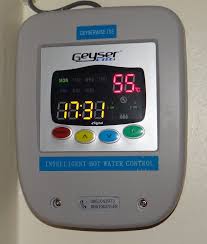

Does geyser timer save electricity is one of those questions South African homeowners keep coming back to, especially after an electricity bill that felt noticeably higher than it should have been. The geyser is almost always the biggest electricity consumer in the home, and the idea that a relatively cheap timer switch could meaningfully reduce that cost sounds almost too straightforward to be true. The short answer is yes, a timer does save electricity. The longer answer involves understanding why, by how much, and whether the saving in your specific home is worth the cost of fitting one.
This guide works through all of that in plain terms. No jargon, no vague promises. Just an honest look at how geyser timers work, what they cost in South Africa, what kind of savings are realistic, and what mistakes people make when setting them up or choosing the wrong type.
A geyser timer saves electricity by cutting power to the geyser element during periods when hot water is not being used, most commonly overnight and during the middle of the day. This prevents the element from running unnecessary heating cycles to compensate for standby heat loss. For most South African households, a well-configured timer reduces water heating electricity consumption by 10% to 25% depending on current usage patterns and how cold the ceiling space gets. At current electricity tariffs, that typically translates to a monthly saving of R80 to R300 for an average family.
How a geyser timer actually works
Most people have a rough idea of what a timer does, but understanding the mechanism helps explain why the saving is real and not just a marketing claim.
Your electric geyser maintains water at a set temperature, typically around 60 degrees Celsius. As the water cools, the thermostat triggers the element to heat it back up. This cycle happens continuously, including at 2am when nobody in the house is awake and no taps are running. The element is not running constantly, but it is cycling on and off throughout the night to prevent the stored water from dropping too far below the set temperature. Every one of those nighttime cycles costs electricity that produces no usable benefit for anyone.
A timer switch cuts power to the geyser circuit entirely during the hours you specify. During those hours, the thermostat cannot trigger the element even if the water temperature drops. The water cools slowly, and a well-insulated tank loses relatively little heat over six to eight hours. When the timer restores power roughly an hour before your household starts using hot water, the element runs a single heating cycle to bring the tank back up to temperature. That single cycle uses less electricity than the multiple short cycles that would have occurred overnight without a timer.
The net effect is that the element does the same heating work over the course of a day but in fewer, more deliberate cycles, and it avoids running at all during the long overnight period when nobody needs hot water.
Types of geyser timer available in South Africa
Not all timer options work the same way, and the type you choose affects both the cost and the functionality.
Plug-in mechanical timers are the most basic option. These are the round dial timers that clip tabs around a 24-hour dial to set on and off periods. They are inexpensive, around R150 to R350, but they are designed for standard wall plugs and are not suitable for the high-current circuit that a geyser runs on. Using one incorrectly is a fire and electrical risk. They are not appropriate for geyser installations and are only mentioned here because people sometimes ask about them. Do not use a standard plug-in timer on a geyser.
Hard-wired mechanical geyser timers are fitted directly into the geyser circuit by an electrician or registered plumber. They are purpose-built for the electrical load a geyser draws and are the most commonly installed type in South African homes. They use a 24-hour dial with manual tabs to set on and off periods and cost between R400 and R800 for the unit. Installation typically adds R500 to R1,000 in labour. Total installed cost for this type is generally R900 to R1,800.
Digital programmable timers offer more flexibility than the mechanical type. They allow multiple on and off periods to be set for different times of day and different days of the week, which is useful for households with irregular schedules. They are slightly more expensive at R700 to R1,500 for the unit, with similar installation costs. Total fitted cost is usually R1,200 to R2,500.
Smart geyser controllers sit at the premium end and connect to your home Wi-Fi. They allow the geyser to be controlled via a smartphone app, can be programmed remotely, and some models track energy usage over time. These cost R1,500 to R4,000 for the unit and installation. For a household that is serious about monitoring and managing energy consumption, the added visibility is useful. For a household that just wants a basic saving, the smart controller is more than what is needed.
Heat pump controllers and solar geyser controllers are specialised timers that work in conjunction with those specific systems. If you have a solar geyser or heat pump, the controller setup is different from a standard electric geyser timer and is specific to those installations.
What does a geyser timer actually cost to install in South Africa?
Getting clear on the numbers is important because the timer is only worth fitting if the saving covers the cost within a reasonable time frame.
A basic hard-wired mechanical timer, fully installed by a registered electrician, costs between R900 and R1,800 in most parts of South Africa. Urban areas like Johannesburg, Cape Town, and Durban tend to have higher labour rates, so the upper end of that range is more common in those cities. A digital programmable timer installed in the same way typically runs R1,200 to R2,500. A smart controller at the top of the range can reach R3,500 to R5,500 installed.
For most households, the mechanical or digital timer is the practical choice. The smart controller makes sense for those who want visibility into energy usage or who are managing multiple properties remotely.
In terms of payback: a timer that costs R1,500 installed and saves R150 per month pays for itself in ten months. A timer that costs R2,500 installed and saves R200 per month pays off in about a year. These are realistic scenarios for average South African family homes. After payback, the saving continues for the life of the timer, which is typically many years.
How to set up a geyser timer correctly
This is where many households get less value than they should from their timer, because it is programmed for the wrong periods or in a way that leaves the household without hot water at inconvenient times.
The goal is to have the geyser powered off during the long periods when no hot water is being used, and powered on long enough before high-demand periods to ensure the tank is fully heated when needed.
A typical weekday programming for an average family might look like this: power on at 4:30am, power off at 8:00am once the morning showers and breakfast rush are done, power on again at 4:30pm ahead of the evening routine, and power off at 10:00pm after dishes and the last shower. The geyser is off overnight from 10pm to 4:30am, which eliminates the nighttime cycling that contributes to electricity waste.
Weekend schedules often differ because the household is home during the day and may use more hot water at different times. A digital or smart timer handles this more easily than a mechanical one.
The most important practical tip that most people overlook: programme the timer to switch on at least 45 minutes to an hour before you need hot water, not at the exact time you need it. The element needs time to bring the tank back up to temperature after the overnight off period. If the timer switches on at 6:00am and the first shower is at 6:05am, the water will be lukewarm. Give it enough lead time and you will not notice any difference in your hot water supply.
Common mistakes that reduce or eliminate the saving
Setting the timer incorrectly so that the household repeatedly runs out of hot water and then overrides or removes the timer entirely is probably the most common outcome when this goes wrong. The solution is almost always to adjust the schedule rather than give up on the timer, but that requires understanding what went wrong.
Installing the timer without also fitting a geyser blanket is a missed opportunity. The two work together. The timer prevents unnecessary heating cycles. The blanket reduces the rate at which heat is lost during the off periods, meaning the tank retains more temperature overnight and the element has less work to do when it switches on again. A blanket costs R350 to R600 and significantly improves the effectiveness of the timer.
Using an electrician who is not registered to install the timer creates compliance issues. A geyser circuit modification requires certified electrical work and should come with a certificate of compliance. Without this, your home insurance may not cover related incidents. It also matters for safety, as an incorrectly wired timer on a high-current circuit is a genuine hazard.
Programming the same schedule for weekdays and weekends without adjusting for different usage patterns means either wasting electricity on days when the schedule does not match actual behaviour, or running out of hot water at inconvenient times on weekends. Most digital timers allow separate weekday and weekend programming and it is worth using that feature.
Expecting the timer alone to produce dramatic savings without addressing other contributing factors is unrealistic. If the thermostat is set too high, the tank has no insulation, and the household takes very long showers, a timer will make some difference but the overall consumption will remain high. The timer works best as part of a set of small improvements rather than a single magic fix.
What else affects how much the timer saves
The baseline efficiency of your geyser setup determines how much room there is for a timer to make a difference. Here is what interacts with the timer’s effectiveness.
Tank insulation: A well-insulated tank loses less heat overnight, so the single morning heating cycle after the off period is shorter. A poorly insulated tank sitting in a cold ceiling loses significantly more heat, meaning the element works harder when it does switch on. Adding a blanket before or at the same time as fitting the timer is the right approach.
Thermostat setting: A tank set to 60 degrees loses heat more slowly than one set to 70 degrees. The gap between the set temperature and the ambient ceiling temperature determines the rate of heat loss. Keeping the thermostat at the correct 60 degree setting is important.
Household usage patterns: The timer works best for households with predictable routines. If your household uses hot water at highly variable times, a smart controller that allows on-demand switching from a phone is more practical than a fixed timer schedule.
Age and condition of the geyser: An older element that heats slowly or a thermostat that does not cut out accurately at the right temperature affects how efficiently the morning heating cycle runs. If the element is scaling up or the thermostat is drifting, getting those attended to before fitting a timer gives you a better baseline.
Read more: How many kw does a geyser use?
Is a geyser timer worth it for your home
For most South African households running a standard electric geyser, the answer is yes. The installation cost is recoverable within a year in most cases, the ongoing saving continues for as long as the timer is in place, and the practical impact on daily hot water availability is zero if the schedule is set correctly.
The homes that benefit most are those where the geyser is running unchecked around the clock, where the ceiling is cold in winter, and where the household has a reasonably consistent daily routine. The homes where a timer makes the least difference are those where hot water is used at genuinely unpredictable times throughout the day and night, in which case a smart controller is a more practical fit.
Does geyser timer save electricity? Yes, consistently and reliably, for most homes. The key is choosing the right type, having it installed properly by a certified electrician, programming it to match your actual household routine, and pairing it with basic insulation on the tank and pipes. None of that is complicated or expensive, and the cumulative saving on your monthly electricity bill is real.