
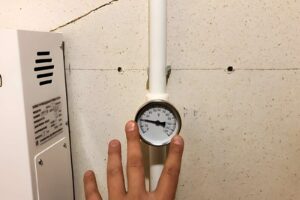

You step into the shower expecting a decent stream of water and instead get something that feels like a garden hose with a kink in it. The frustrating part is that your cold water pressure seems completely fine. It is only the hot side that feels weak, and that is a clue most people miss. If this sounds familiar, you are probably wondering: can a bad water heater cause low water pressure? The short answer is yes, absolutely.
Your water heater is not just a heating device, it is also part of your home’s plumbing system, and when something goes wrong inside it, the effects can show up as reduced flow, inconsistent pressure, or water that sputters before it runs smoothly. This guide covers the most common reasons a failing water heater affects pressure, how to diagnose what is actually going on, and what repairs typically cost so you know what you are dealing with before calling a plumber.
The quick answer
Yes, a bad water heater can cause low water pressure on the hot side of your plumbing. The most common culprits are sediment buildup inside the tank restricting flow, a partially closed or faulty shut-off valve, a failing pressure-reducing valve, or a clogged inlet filter screen on a tankless unit. In some cases, corroded pipes connected to an older water heater can also restrict flow significantly.
Common causes of low hot water pressure from a water heater
Sediment buildup inside the tank
This is by far the most frequent cause, and it is something most homeowners never think about until they start having problems. Over time, minerals in your water, primarily calcium and magnesium, settle at the bottom of the tank as the water heats. In areas with hard water, this process happens faster. As sediment accumulates, it can partially block the outlet pipe at the top of the tank where hot water exits to your home’s plumbing. The result is reduced flow that gets gradually worse over months or years. You might not even notice it happening because it is so slow.
If your water heater is more than five or six years old and has never been flushed, sediment is a very likely contributor to your pressure problem. You may also notice other signs alongside the pressure drop: a rumbling or popping noise from the tank when it is heating, slightly discolored water, or longer wait times for hot water to reach your taps.
A partially closed shut-off valve
The cold water supply valve feeding your water heater is sometimes bumped, turned slightly, or left partially closed after a repair or inspection. Even being 20 or 30 percent closed can noticeably reduce the flow of water entering and exiting the tank. This is one of those embarrassingly simple fixes that can take a plumber about 30 seconds to find and costs you nothing except maybe a service call fee.
Check the valve on the cold water inlet pipe at the top of your tank. It should be fully open, meaning the handle is parallel to the pipe for a ball valve, or turned all the way counterclockwise for a gate valve. If it is even slightly off, that alone could explain the pressure issue.
A faulty or worn-out pressure-reducing valve
Many homes have a pressure-reducing valve installed on the main water supply line. These devices regulate the pressure coming into your home from the municipal supply. When they fail, they can either allow pressure to spike to unsafe levels or drop it so low that your hot water system seems sluggish. A failing pressure-reducing valve often affects the whole house, but sometimes the symptoms are more obvious on the hot side because the water heater’s internal components amplify the issue.
A pressure-reducing valve replacement typically costs $200 to $500 installed, depending on your location and the valve itself. It is not a DIY job for most people because it involves working on the main supply line.
A clogged inlet screen on a tankless water heater
Tankless water heaters have a small filter screen on the cold water inlet to catch debris before it enters the unit. Over time this screen can become clogged with sediment, rust particles from your pipes, or mineral deposits. When it gets blocked enough, water cannot flow through the unit fast enough to keep up with demand, and pressure on the hot side drops noticeably. This is one of the most overlooked maintenance items on tankless units and one of the easiest to fix.
Cleaning the inlet screen takes about 15 minutes and requires nothing more than a pair of pliers and a small brush. Most people have never done it, and if your tankless unit has been running for three or more years without any maintenance, this is worth checking first before assuming something more serious is wrong.
Corroded or scaled pipes connected to the water heater
Older homes with galvanized steel pipes are particularly prone to this. As galvanized pipes age, they corrode from the inside out, and the buildup narrows the internal diameter of the pipe over time. Because hot water accelerates corrosion, the pipes nearest your water heater, and those carrying hot water throughout the house, tend to deteriorate faster than the cold supply lines. The result is a gradual pressure drop that worsens over time and often gets blamed on the water heater itself when the pipes are actually the source of the problem.
If your home is more than 40 years old and still has the original plumbing, corroded pipes are a real possibility. Replacing a section of corroded pipe costs $200 to $600 depending on accessibility and length. A full repipe of an older home can run anywhere from $3,000 to $10,000 or more, which is a significant project, but it solves pressure and flow problems permanently.
A partially blocked hot water outlet dip tube
The dip tube is a plastic pipe inside your tank that directs incoming cold water to the bottom of the tank so it does not mix with the hot water at the top. When dip tubes crack or break, pieces of plastic can float up and partially block the hot water outlet. This was a well-documented issue with certain water heaters manufactured between 1993 and 1997, but it can happen to any tank-style unit as the dip tube ages and degrades. If you notice small white or grey plastic flakes in your hot water or on your showerheads and aerators, a broken dip tube is very likely the cause of your pressure issues.
Replacing a dip tube is a moderately straightforward repair, costing $10 to $20 for the part, with labor adding another $75 to $150 if you hire a plumber.
How to diagnose the problem yourself
Before spending money on a service call, there are a few things you can check on your own.
Start by testing whether the pressure issue is limited to hot water only. Open a cold tap and a hot tap in the same bathroom and compare the flow. If the cold side is strong and the hot side is weak, the issue is almost certainly somewhere in or around your water heating system. If both sides are equally weak, the problem is more likely your main supply or a pressure-reducing valve issue.
Next, check all the shut-off valves associated with your water heater: the cold water inlet valve and the hot water outlet valve if one is present. Make sure both are fully open.
Then, run your hot water for a few minutes and check whether the pressure gradually improves or stays consistently weak. A pressure that gradually improves after a few minutes could point to a partially blocked outlet that clears somewhat as flow pushes through. Consistent weakness from the first second suggests a restriction that is constant, like a clogged inlet screen or partially closed valve.
If you have a tankless unit, check the inlet filter screen. It is usually accessible without any special tools.
How to fix it
Flushing the water heater tank. For sediment buildup, the fix is draining and flushing the tank. Connect a garden hose to the drain valve at the bottom of the unit, turn off the cold water supply, and let the tank drain completely. For heavy sediment, you may need to briefly turn the cold supply back on to stir up and flush out the remaining debris at the bottom. This process takes 30 to 60 minutes and costs nothing if you do it yourself. Having a plumber do it typically costs $80 to $200 depending on location.
Cleaning the inlet filter on a tankless unit. Turn off the water supply to the unit, depressurize the system by opening a nearby tap, then use pliers to unscrew the inlet filter housing. Remove the screen, rinse it under running water, and use a small brush to clear any stubborn deposits. Reinstall and restore water pressure. Job done.
Replacing corroded shut-off valves. If a valve is not fully opening even when turned, it may be internally corroded or seized. A plumber can replace it in under an hour, typically for $100 to $250 including the new valve.
Clearing blocked aerators and showerheads. If the pressure drop seems worse at specific fixtures, unscrew the aerator or showerhead and soak it in white vinegar for an hour. Mineral deposits dissolve easily in vinegar and this often restores flow without any additional repairs needed. It is one of those quick wins that a lot of people never try because they assume the problem is something bigger.
When to call a professional
Call a licensed plumber if the basic checks above do not resolve the issue. You should also get a professional involved if you notice any of the following: rusty or discolored hot water that does not clear after running the tap for a few minutes, a significant water pressure drop across the whole house rather than just the hot side, any signs of leaks around the water heater, or a unit that is more than 10 to 12 years old and has never been serviced. At that age, a repair might make sense financially, but it is also worth getting an honest assessment about whether replacement is the better long-term move.
What repairs typically cost
Flushing a water heater professionally runs $80 to $200. Replacing a dip tube is $85 to $175 installed. Replacing a shut-off valve costs $100 to $250. A pressure-reducing valve replacement runs $200 to $500. Replacing a heating element on an electric unit, which can sometimes contribute to pressure irregularities if it has failed and caused the tank to overheat, typically costs $150 to $300 installed. If corrosion inside an older tank is the root cause, a full water heater replacement will run $400 to $900 for a tank model or $800 to $1,500 or more for a tankless unit, including installation. These figures are primarily based on U.S. pricing, though costs in Canada, the UK, and Australia tend to be broadly similar with some variation.
Common mistakes to avoid
One mistake people make regularly is replacing their showerhead or faucet fixtures thinking that is where the pressure problem originates, only to find the issue was inside the water heater the whole time. Testing the hot and cold pressure separately first would have saved them the trouble and the expense.
Another common error is ignoring low hot water pressure for months because it is not a complete outage. That is usually where things go wrong. Sediment continues to build, pipes continue to corrode, and what could have been a $150 flush job eventually turns into a full replacement because the damage compounds over time.
Prevention tips
Flush your tank water heater at least once a year, or every six months if you live in an area with particularly hard water. Clean the inlet filter on a tankless unit every 12 months. Install a water softener if your area has hard water and you are having repeated issues with sediment or mineral buildup. Check all shut-off valves associated with your water heating system annually to make sure they open and close freely. And if your home is more than 20 years old, consider having a plumber inspect the hot water piping for early signs of corrosion before the problem shows up as a pressure drop.
Read more: Can a bad water heater raise electric bill
When looking at can a bad water heater cause low water pressure, low hot water pressure is one of those problems that starts small and gets worse slowly enough that people often adapt to it rather than fixing it. But the underlying causes, sediment, corroded valves, clogged screens, degraded pipes, are all things that get harder and more expensive to deal with the longer they go unaddressed. Checking the simple things first costs nothing, and in many cases that is all it takes to restore decent pressure. If the issue turns out to be more involved, knowing the likely repair costs up front at least means you can make an informed decision rather than being caught off guard by a plumber’s quote.