
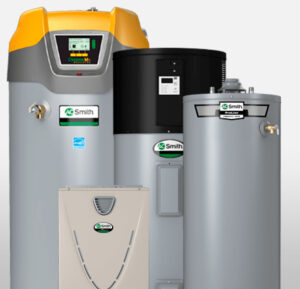

If you’ve landed here because you’re looking into the A.O Smith Promax water heater, whether for a replacement or a first-time install, you’re in the right place. This guide covers everything you actually need to know: how these units work, what the different models offer, what they cost, and what kind of problems to watch out for. No fluff, no technical manual language.
Most people never give their water heater a second thought until the hot water runs out mid-shower. At that point, you’re suddenly doing a lot of research very quickly
What Is the A.O Smith Promax Series?
The Promax line is A.O Smith’s residential tank water heater range, built for the everyday household that needs reliable hot water without a lot of fuss. These are traditional storage-style water heaters, meaning they heat and hold a large volume of water in a tank so it’s ready whenever you need it. That’s different from tankless systems, which heat water on demand. For most households, this kind of hot water system is perfectly adequate and a lot simpler to manage long term.
The Promax series comes in both gas and electric models, with tank sizes ranging from around 30 gallons up to 80 gallons depending on the version. A.O Smith has been producing water heaters for over a century, and the Promax sits in their mid-range category, balancing cost and performance reasonably well. It’s not the premium tier, but it’s also not the bare minimum. Most of the time, that’s exactly what a household needs.
Quick Answer: Is the Promax a Good Choice?
For straightforward residential use, yes. If your home runs on natural gas or propane and you want a dependable tank water heater with solid energy efficiency ratings, the Promax series is worth considering. The electric versions are also widely available and work well in homes without gas connections. Where the Promax stands out is consistency. It’s not a flashy unit, but it does the job reliably and replacement parts are widely available if something does go wrong.
A.O Smith Promax Water Heater Model Breakdown: Gas vs Electric
Understanding the difference between the gas and electric versions matters before you commit to a purchase.
Gas Promax models are powered by natural gas or liquid propane and are typically faster at heating large volumes of water. They tend to have higher first-hour ratings, which is a measure of how much hot water the unit can deliver in the first hour of use. A 40-gallon gas Promax will generally outperform a 40-gallon electric model in terms of recovery time. That matters if you have a larger household where multiple people are showering, running the dishwasher, and doing laundry at similar times. Gas models also tend to be cheaper to operate in areas where natural gas prices are lower than electricity rates.
Electric Promax models are simpler to install because they don’t require gas lines or venting. If your home already has an electric water heater, swapping it out for an electric Promax is usually a fairly straightforward job for a licensed plumber or electrician. The downside is slower recovery time. If the tank runs low, it takes longer to reheat compared to a gas unit. That said, for smaller households or homes with moderate hot water demand, electric models are entirely adequate.
Tank sizes across the Promax range typically include 30, 40, 50, and 75 or 80 gallon options. The right size for your home generally comes down to how many people live there. A rough guide: one to two people can usually manage with a 30 or 40 gallon tank, three to four people typically do better with a 50 gallon unit, and larger households or homes with high simultaneous demand may want the 75 or 80 gallon version.
AO Smith Promax Water Heater Price
This is usually what people want to know most, so here’s a realistic breakdown. Unit prices vary depending on the model, tank size, and where you’re buying from. Electric Promax models at the 40-gallon mark tend to start around $500 to $700 for the unit alone. Gas models in the same tank size typically run $600 to $900 depending on the retailer and whether it’s set up for natural gas or propane. Larger tank sizes push those prices higher, with 75 to 80 gallon versions often landing in the $900 to $1,400 range.
Installation costs are separate and can add significantly to the total. A straightforward swap of a like-for-like unit by a licensed plumber typically costs $150 to $400 in labor, depending on your location and the complexity of the job. If your installation involves new gas lines, upgraded venting, updated electrical wiring, or code compliance work like earthquake straps or updated drain pans, the labor costs can climb to $600 or more. That’s not unusual and it’s worth budgeting for it honestly rather than being caught off guard.
In total, expect to spend somewhere between $700 and $1,800 for a Promax installation when you factor in the unit plus professional installation. On the lower end, you’re looking at an electric model with a simple swap. On the higher end, a larger gas unit with a more involved install. These are general ranges and local pricing always varies.
One thing most people overlook: some utility companies offer rebates for installing energy-efficient water heaters. It’s worth checking with your local utility before you buy, because you might be able to offset $50 to $200 off the total cost with a rebate you didn’t know existed.
Energy Efficiency: What the Numbers Mean
The Promax series carries a decent Energy Factor or Uniform Energy Factor rating depending on the model year. This number tells you roughly how efficiently the unit converts energy into hot water. Higher numbers are better. Most Promax gas models land around a 0.60 to 0.67 UEF, while electric models tend to score higher in the 0.90 to 0.95 range because electric resistance heating is efficient even if electricity itself costs more.
It’s worth noting that a heat pump water heater will blow these numbers out of the water with UEF ratings above 3.0, but that’s a completely different product category with a much higher upfront cost and specific installation requirements. If energy efficiency is your main priority, a heat pump water heater is worth researching separately. But if you want a reliable standard tank water heater with reasonable running costs, the Promax holds its own.
Common Problems and What to Watch For
No water heater is trouble-free forever, and the Promax is no exception. Here are the issues that come up most often.
Pilot light problems on gas models. This is probably the most common complaint with gas water heaters in general. If your pilot light keeps going out, the usual culprits are a faulty thermocouple or a dirty pilot orifice. Replacing a thermocouple is a relatively inexpensive fix, typically $20 to $50 for the part and a couple of hours of labor if you use a professional. Ignoring it isn’t ideal, because a malfunctioning thermocouple can also be a safety issue.
Sediment buildup. Over time, minerals from your water supply accumulate at the bottom of the tank. You’ll usually notice this as a rumbling or popping sound when the water heater is running. It can also reduce efficiency and shorten the unit’s lifespan. Flushing the tank once a year helps significantly, and it’s something many homeowners skip entirely. That’s usually where things go wrong with premature tank failure.
Anode rod depletion. The anode rod is a sacrificial metal rod inside the tank that protects the lining from corrosion. Once it’s depleted, the tank itself starts to corrode. Most manufacturers, including A.O Smith, recommend checking and replacing the anode rod every three to five years. Replacing it costs around $30 to $80 for the part and keeps the tank lasting its full lifespan of eight to twelve years.
Leaks around fittings. Small leaks at the pressure relief valve or at inlet and outlet connections are sometimes a result of installation issues or worn gaskets. These are usually fixable without replacing the whole unit. If water is pooling beneath the tank itself, that usually means the tank has failed internally, and replacement is necessary.
Installation: What the Process Actually Involves
If you’re replacing an existing tank water heater with a similar Promax model, the job is reasonably straightforward for a licensed professional. The old unit gets drained and removed, the new one gets positioned and connected to the existing water supply lines and gas or electrical connections, and then it’s tested and lit or powered on. In most cases this takes two to four hours.
Where things get more complicated is when you’re upgrading to a larger tank size, switching from electric to gas or vice versa, or when your home’s plumbing or electrical setup requires updates to meet current code. Many older homes have water heaters in awkward spots, like narrow closets or basements with tight access, and that alone can add time and cost to the job.
One mistake homeowners often make is buying a unit that’s too large for the space. Measure your existing installation area carefully before ordering, because some of the larger Promax models have different height and diameter dimensions than what they’re replacing. A unit that doesn’t fit means a delay, a return trip, and additional costs. It sounds obvious but it happens more often than you’d expect.
How Long Will It Last?
A well-maintained Promax water heater should last eight to twelve years. Gas models tend to sit at the lower end of that range, electric models sometimes toward the higher end, but a lot depends on your water quality and how diligently you maintain it. Hard water accelerates sediment buildup and anode rod depletion, which shortens lifespan. If you live in an area with very hard water, a water softener or at least more frequent maintenance makes a real difference.
If your current water heater is approaching the ten-year mark and starting to show problems, replacement usually makes more sense than continuing to repair it. That’s a decision worth making proactively rather than waiting for it to fail completely and end up without hot water while you scramble to find a plumber on short notice.
Choosing the Right Model for Your Home
Here’s what usually matters when making the final call. Think about your household size and peak hot water demand, not just average use. If you regularly run the dishwasher while two people shower in the morning, you need a unit with a good first-hour rating, not just a big tank. Check the EF or UEF rating on the specific model you’re considering. Look at the physical dimensions to confirm it fits your installation space. And factor in operating costs over the unit’s lifespan, not just the purchase price.
This depends on your setup, but in most average-sized homes with three to four people, a 50-gallon Promax gas model hits the right balance of capacity, recovery time, and operating cost. Electric models are a solid choice where gas isn’t available or where installation simplicity is a priority.
The A.O Smith Promax water heater is a practical, dependable option that has earned its place in the mid-market for good reasons. It won’t win awards for innovation, but it heats water reliably, parts are easy to find, and with basic maintenance it’ll serve a household well for a decade or more. Know what size you need, budget realistically for installation, and don’t skip the annual maintenance. That’s really all it takes to get the most out of this kind of hot water system.