

Most people discover they need to know how to reset Worcester boiler at the worst possible moment. It’s either early in the morning, the house is freezing, and the boiler is sitting there with a flashing light and no explanation, or it’s the middle of winter and you’ve got guests arriving in an hour. The reset button feels like a lifeline in those moments, and sometimes it genuinely is. But sometimes pressing it repeatedly and hoping for the best is just delaying something that needs proper attention.
This guide covers everything you need to know about resetting a Worcester Bosch boiler, what the fault codes mean, when a reset will actually solve the problem, and when it won’t. There’s also some honest advice on costs, because calling an engineer for something you could have fixed yourself is frustrating, and equally, putting off a call when one is needed can turn a small repair into an expensive one.
To reset a Worcester Bosch boiler, locate the reset button on the front panel (it usually has a flame symbol or is labelled clearly), press and hold it for around three seconds, then release it and wait for the boiler to restart. If the boiler fires up and runs normally, you’re done. If it locks out again within minutes or hours, the reset has not fixed the underlying fault and you need to investigate further.
Where the reset button is on Worcester Bosch boilers
Worcester Bosch positions the reset function slightly differently depending on the model, which trips up a lot of people.
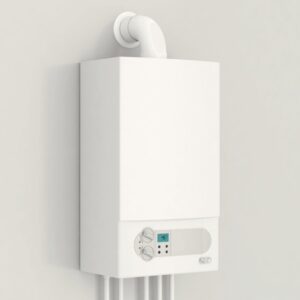
On the Greenstar i and Si series, the reset is a physical button on the front of the unit, often marked with a flame icon or simply the word “reset.” On the Greenstar CDi and more recent models like the Greenstar 2000, 4000, and 8000, the reset is accessed through the digital display. You typically press and hold a specific button combination, or navigate a short menu. The display will show a fault code before lockout, and resetting clears the active fault state but does not fix the root cause.
If you’re unsure which model you have, check the sticker on the inside of the front panel. It’ll show the full model name and serial number. That’s also useful if you need to call Worcester Bosch’s customer support line or search for a specific fault code.
What the fault codes actually mean
Worcester Bosch boilers display fault codes as letters and numbers on the display, and understanding them makes the difference between a five-second reset and a wasted hour of trial and error.
EA 227 / EA fault codes are among the most common. These usually indicate an ignition failure, meaning the boiler tried to fire but couldn’t establish a flame. This can be caused by low gas pressure, a faulty ignition lead, a dirty flame sensor, or a problem with the gas valve. A reset will clear the lockout, but if ignition fails again, the boiler will lock out again.
C6 fault code relates to the fan. If the fan isn’t running at the right speed, the boiler won’t fire for safety reasons. This one usually needs an engineer.
D1 fault code indicates a problem with the printed circuit board (PCB) or internal electronics. A reset sometimes clears a temporary D1, but recurring D1 faults typically mean a component is failing.
E9 fault code is a safety thermostat lockout. This happens when the boiler overheats, often due to a blocked heat exchanger, low water flow, or a faulty pump. Do not keep resetting an E9 fault without finding out why it’s overheating.
H07 or pressure-related faults are exactly what they sound like. The system pressure is too low for the boiler to operate safely. In this case, the fix is repressurising the system rather than just resetting the boiler. Resetting won’t do anything if the pressure is sitting below 0.5 bar.
Most of these codes are listed in the Worcester Bosch product manual, which is available as a PDF on their website if you’ve lost the paper copy. It’s genuinely worth bookmarking for future reference.
How to reset Worcester boiler step by step
Here’s the actual process, laid out simply.
Step 1: Note the fault code. Before you do anything, look at the display and write down whatever code is showing. Even if you don’t know what it means right now, you might need it later if the boiler keeps faulting.
Step 2: Check the pressure gauge. If the gauge is below 1 bar, the boiler may have locked out due to low pressure rather than a mechanical fault. Repressurise the system to between 1 and 1.5 bar before attempting a reset. Resetting without addressing low pressure will just result in another lockout.
Step 3: Check the condensate pipe. In cold weather, the condensate drain pipe (the small plastic pipe that exits through an external wall) can freeze. A frozen condensate pipe is one of the most common reasons for winter boiler lockouts across central heating systems in the UK. If it’s frozen, thaw it with warm water and then attempt the reset.
Step 4: Press and hold the reset button. On models with a physical button, press and hold for around three seconds. On digital models, follow the display prompts. You’ll often hear a click or a brief ignition attempt.
Step 5: Wait. Give the boiler 30 to 60 seconds to go through its startup sequence. Don’t press anything else during this time.
Step 6: Monitor it. If the boiler fires up successfully, let it run for a few minutes and check that your hot water and heating are working normally. Check the pressure gauge again after about ten minutes of running. If it drops noticeably, there may be a leak somewhere in the system.
When a reset will fix the problem
A reset genuinely solves the issue in a few specific situations. A one-off power cut or electrical glitch can cause the boiler to lock out as a precaution, and a simple reset clears it with no further issues. A frozen condensate pipe, once thawed, just needs the boiler restarted to get things going again. A brief, temporary ignition failure due to a momentary drop in gas pressure can sometimes resolve itself after a single reset.
In these cases, the boiler stays running after the reset and you don’t see the fault code again for weeks or months. That’s a good sign.
When a reset is not enough
The reset is not a fix. It’s a restart. If your boiler locks out more than once or twice in a short period, something is genuinely wrong and pressing the reset button repeatedly is not going to change that. It’s just masking the fault while the underlying problem potentially gets worse.
Recurring ignition failures, persistent E9 overheating faults, or fault codes related to the fan, PCB, or gas valve all need an engineer. Attempting to keep resetting a boiler through these kinds of faults can in some cases cause additional wear on components that were otherwise salvageable.
It’s also worth knowing that Worcester Bosch boilers have a built-in lockout counter. If the boiler locks out multiple times in quick succession, it may enter a hard lockout state that can only be cleared with an engineer’s diagnostic tool. That’s not ideal, especially if it happens on a Friday evening.
When to call a Gas Safe engineer
Call a Gas Safe registered engineer if any of the following apply. The boiler locks out repeatedly within hours of resetting. The fault code relates to the gas valve, PCB, or fan. There’s a smell of gas near the boiler or anywhere in the property (in which case, do not attempt any reset, leave the property, and call the National Gas Emergency Service on 0800 111 999). The boiler is making unusual noises like banging, gurgling, or a high-pitched whine. The pressure drops significantly within a short period after repressurising.
A standard diagnostic callout from a heating engineer will typically cost between £80 and £150 depending on where you are in the country and the company you use. London and the South East tend to be at the higher end of that range. Engineers in more rural areas of the North or Midlands often come in slightly cheaper, but availability varies. Out-of-hours and weekend callouts usually attract a premium of £30 to £70 on top of standard rates.
Cost of common repairs after a reset fails
If a reset doesn’t fix the problem, the cost of the actual repair depends entirely on what’s failed.
A frozen condensate pipe thaw and reset is often free if you do it yourself, or around £60 to £90 if an engineer comes out to do it. A gas valve replacement costs between £200 and £400 including parts and labour. An ignition lead or electrode replacement is a smaller job, usually around £100 to £180. A printed circuit board (PCB) replacement is one of the more expensive repairs, often costing £300 to £500. A pump replacement sits in the range of £150 to £300. An expansion vessel replacement is typically £150 to £250.
These aren’t small amounts, and it’s worth bearing them in mind when deciding whether to repair an ageing boiler or replace it. A boiler that’s over 12 to 15 years old and requiring repeated repairs is often more cost-effective to replace than to keep patching up. A new Worcester Bosch combi boiler installation, including a gas-safe registered engineer fitting it, typically runs between £1,500 and £3,000 depending on the model and the complexity of the installation.
Common mistakes people make when resetting
The most common mistake is resetting the boiler without checking or addressing the fault first. A lot of people see the lockout light, press reset immediately, and consider the job done. That works sometimes, but it means they never actually know what caused the lockout in the first place.
Another frequent one is ignoring the fault code. The display is trying to tell you something specific. Taking two seconds to write it down before resetting costs nothing and gives you useful information if the fault returns.
Repressurising too aggressively is also a common issue. People top up the pressure, which is correct, but overshoot past 2 bar, which then triggers a different fault. The target range is 1 to 1.5 bar cold. That’s where it should be before you attempt a reset related to low pressure.
Keep the boiler manual somewhere accessible, even as a bookmarked PDF. The fault code list in the back is genuinely useful when something goes wrong.
Annual servicing makes a measurable difference to how often a boiler locks out. Most boiler lockouts in homes without regular servicing are caused by issues that would have been spotted and addressed during a service. A yearly service costs around £80 to £120 and includes checking the ignition components, cleaning the heat exchanger, testing the gas pressure, and inspecting the flue. It’s one of the better-value maintenance decisions you can make for a gas boiler.
In winter, wrap any exposed condensate pipework outside the property with foam pipe lagging. It costs a few pounds from any DIY shop and dramatically reduces the chance of a freeze-related lockout. Most people don’t do this until after they’ve had their first frozen pipe incident.
Read more: How to increase pressure on Worcester boiler without key
Knowing how to reset Worcester boiler correctly is straightforward once you understand what the reset button actually does. It clears the fault state and allows the boiler to attempt a restart. What it does not do is fix a faulty component, thaw a frozen pipe on its own, or restore low system pressure. Done correctly and at the right time, a reset is a quick and effective first step. But if the boiler keeps locking out, take the fault code seriously, check the basics, and don’t hesitate to call a Gas Safe engineer before a relatively minor fault turns into a much more expensive one.