
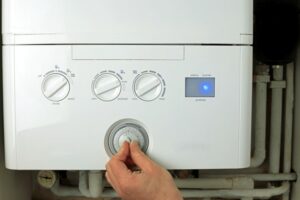

There’s a particular kind of frustration that comes with topping up your boiler pressure, watching everything work fine for a few days, and then finding it’s dropped again. If this sounds familiar, you’re dealing with one of the most common boiler complaints in UK homes. A one-off pressure drop is usually nothing to worry about.
Boilers lose small amounts of pressure naturally over time, and topping up once or twice a year is perfectly normal. But if you’re finding yourself at the filling loop every few weeks, or the pressure is dropping noticeably within days of being repressurised, something is wrong and it won’t fix itself.
Understanding why does my combi boiler keep losing pressure is the first step to working out whether this is a straightforward fix or something that needs a Gas Safe engineer. This guide covers the most likely causes, what you can actually do yourself, when to call for professional help, and what repairs are realistically going to cost.
A combi boiler that keeps losing pressure almost always has a leak somewhere in the system, a faulty pressure relief valve, or a failing expansion vessel. Topping up the pressure repeatedly without finding the underlying cause is a waste of time and can eventually cause damage to the boiler and the pipework. The source of the problem needs to be identified and fixed, not just managed.
Common causes of boiler pressure loss
A leak in the central heating system
This is the most frequent culprit and the first thing an engineer will look for. Leaks in the central heating circuit can occur at radiator valves, pipe joints, the boiler itself, or anywhere in the pipework that runs through the property. Some leaks are immediately visible as damp patches or drips. Others are slow and tiny, evaporating before they leave any obvious trace, which makes them genuinely tricky to locate.
If you have radiators with older thermostatic valves, these are a particularly common leak point. The valve gland can deteriorate over time and allow small amounts of water to escape. Check around the base of each radiator valve and look for any signs of residue or slight dampness. Even a small white mineral deposit around a joint can indicate water has been weeping through.
Underfloor pipework is the most frustrating scenario. If your home has underfloor heating or pipework running under a solid floor, a leak there can cause pressure to drop without any visible damp. In this case, a pressure test by a plumber or heating engineer is the only way to confirm it.
A faulty pressure relief valve
The pressure relief valve is a safety device fitted to the boiler that releases water if the system pressure gets too high. It’s designed to open at around 3 bar to prevent damage. Over time, these valves can develop a slight weep, releasing small amounts of water even at normal operating pressures. This is a slow leak that’s easy to miss because the water usually exits through a discharge pipe to outside the property.
Check outside near where the boiler condensate or overflow pipes exit the building. If there’s a pipe that occasionally drips or shows signs of dried water marks below it, the pressure relief valve may be partially discharging. This isn’t something you can fix yourself. The valve needs to be replaced by a Gas Safe registered engineer, but it’s a reasonably straightforward repair.
A failing expansion vessel
This one catches a lot of people out because the expansion vessel is inside the boiler and not visible without opening it up. The expansion vessel is a sealed chamber with a rubber diaphragm inside that absorbs the increase in water volume when the system heats up. If the diaphragm perforates or the vessel loses its pre-charge pressure, it can no longer do its job properly.
When the expansion vessel fails, the system pressure rises when the boiler heats up and then the pressure relief valve releases some water to compensate. When the system cools down, the pressure drops below the normal operating range. This creates a cycle where pressure fluctuates noticeably between hot and cold, which is a fairly reliable sign the expansion vessel is involved.
Most people never know this component exists until it fails. That’s fair enough, it’s not something you’d have any reason to think about unless something went wrong.
A leak at the filling loop connection
The filling loop is the device used to repressurise the system, usually a short flexible hose or a built-in lever mechanism connected to the cold mains. If the connection isn’t fully closed after topping up, or if the valve has started to weep, small amounts of water can slowly enter or exit the system in ways that affect pressure.
After using the filling loop, make sure both isolating valves are fully closed. If the boiler is continuously gaining and then losing pressure, a leaking filling loop connection might be allowing a trickle of mains water in, which can cause pressure to rise temporarily and then fall as water escapes through the relief valve. It’s a less common cause but worth checking.
Air in the system
Air pockets can affect pressure readings and cause slightly misleading gauge readings, though this is less likely to cause the repeated pressure drops people typically describe. Bleeding your radiators removes trapped air from the system and is worth doing if you haven’t done it recently, particularly at the start of the heating season. After bleeding radiators, the system pressure will drop slightly because you’ve released some water along with the air, so you’ll need to top up the pressure afterwards.
How to fix it: what you can safely do yourself
Check the pressure gauge on the front of the boiler. The correct operating pressure for most combi boilers when the system is cold is between 1 and 1.5 bar. If it’s dropped below 1 bar, the boiler may display a low pressure warning or stop working altogether.
If the pressure has dropped, repressurise using the filling loop. On most boilers this involves opening one or two small valves under or near the unit until the gauge reads around 1.2 bar, then closing the valves. Your boiler manual will show you exactly how to do this for your specific model, and the process is safe for a homeowner to carry out.
After topping up, make a note of the date and monitor the pressure over the following two to four weeks. A very slow drop over several weeks is normal. A drop back to the same low level within a few days strongly suggests a leak or component fault that needs professional attention.
Walk around your radiators and check every valve connection for any signs of dampness, residue, or drips. Check the area under and around the boiler itself. Look outside for any discharge pipes that appear to be dripping. This simple inspection takes about twenty minutes and can point you directly at the problem, potentially saving you money on diagnostic time.
Bleed your radiators if they haven’t been bled recently. Start at the radiators furthest from the boiler and work your way back. Use a radiator bleed key, turn it slowly until air hisses out, and close it once water appears. Then repressurise the system to compensate for the pressure loss.
When to call a Gas Safe engineer
If pressure keeps dropping within a short period of being topped up, call an engineer. You should also get professional help if you cannot find any obvious source of a leak yourself, if the boiler is making unusual sounds, if pressure fluctuates noticeably between when the heating is hot and when it has cooled down, or if you notice any discharge from external pipes.
Never attempt to open the boiler casing or work on internal components yourself. The expansion vessel, pressure relief valve, and internal pipework connections all require a qualified Gas Safe engineer to inspect and repair safely. This isn’t just a legal requirement for gas work specifically, it’s also common sense given the risks involved in working on a pressurised heating system.
If you’re not sure whether your engineer is Gas Safe registered, you can verify their registration on the Gas Safe Register website using their registration number before they start any work.
What repairs are likely to cost
Callout and diagnostic fees from a Gas Safe engineer typically start at £60 to £100. Some companies charge a fixed-rate callout that includes diagnostics, others will charge separately for the visit and the repair. It’s worth clarifying this upfront when you book.
Common repair costs for pressure-related boiler issues in the UK:
Pressure relief valve replacement: £100 to £200 all in, including parts and labour. This is a relatively quick job for an experienced engineer. Expansion vessel replacement or recharge: £150 to £300. Replacing the vessel is more involved than simply recharging the pre-charge pressure, and cost depends on whether the vessel is an internal component or an external one that can be fitted separately. Locating and repairing a leak at a radiator valve or pipe joint: £80 to £200 depending on where the leak is and how accessible it is. Tracing and repairing a leak in underfloor or concealed pipework: £200 to £600 or more, depending on how much investigation and making-good is required. Filling loop valve replacement: £80 to £150. Full boiler replacement if the unit is beyond economical repair: £1,500 to £3,500 for a typical combi installation.
If your boiler is more than 10 years old and the repair estimate is approaching £400 to £500, it’s genuinely worth getting a replacement quote alongside the repair quote. An ageing boiler with one expensive fault often has other components close to failure as well.
Common mistakes homeowners make
Repeatedly topping up the pressure without investigating why it keeps dropping is probably the most common one. It’s understandable because it takes about two minutes and makes the heating work again, but it doesn’t solve anything. A slow leak left unaddressed can cause corrosion, damp, and structural damage over time, and the cost of putting that right is much higher than fixing the original leak.
Assuming that because the leak isn’t visible it doesn’t exist is another mistake. Slow internal leaks can evaporate quickly, particularly near a warm boiler or pipework. The absence of obvious damp doesn’t mean there’s no leak.
Overpressurising the system when topping up is also worth mentioning. If you fill the system to 2 bar or above when cold, the pressure will rise further as the water heats up, potentially triggering the pressure relief valve to discharge. The correct cold fill pressure is 1 to 1.2 bar for most systems. More is not better.
Skipping the annual boiler service is a habit that allows small issues, including a slow weeping pressure relief valve or a borderline expansion vessel, to go undetected until they become bigger problems. A yearly service from a Gas Safe engineer (around £80 to £120) includes a check of these components and often catches developing faults before they cause a breakdown.
Quick Tips to Prevent This
Get the boiler serviced every year. It’s genuinely the single most effective thing you can do to prevent boiler problems, including pressure issues. Engineers check the expansion vessel charge, inspect the pressure relief valve, and look for signs of internal leaks as part of a standard service.
If your radiators have old manual valves, consider having thermostatic radiator valves fitted when the boiler is next serviced. Modern TRVs are more reliable and less prone to weeping than older valve types.
Add a magnetic system filter if your heating system doesn’t already have one. These devices capture metal particles and sludge circulating in the system, which can accumulate in valves and contribute to valve failure over time. A filter costs around £80 to £150 fitted and can meaningfully extend the life of your boiler and radiator valves.
Monitor the pressure gauge periodically rather than only checking it when the boiler stops working. A quick glance every few weeks takes seconds and means you’ll catch a developing pressure drop early, before it causes the heating to cut out entirely.
Read more: Do I need a water tank with a Combi boiler?
If you’re asking why does my combi boiler keep losing pressure more than once or twice a year, the answer lies somewhere in the system and it’s worth finding it properly. A small repair now is almost always cheaper and less disruptive than ignoring the problem until something more significant fails. Topping up the pressure is fine as a temporary measure, but treat it as a sign that something needs attention rather than a permanent solution.