

With Eskom tariffs going up every year and load shedding making every kilowatt feel precious, South African homeowners are looking at every possible way to cut their electricity bill. One question that comes up regularly, especially during winter, is does a geyser blanket save electricity in any meaningful way, or is it just another product that sounds useful but delivers very little in practice. The short answer is yes, it does make a difference, but how much depends on your specific setup, your roof space temperature, and how your hot water system is currently configured. This article breaks it all down in plain terms so you can decide whether it is worth buying one.
Quick answer
A geyser blanket reduces standby heat loss from your hot water cylinder, which means your element runs less often to maintain the set water temperature. In a typical South African home, this can reduce the energy used for standby heating by 25 to 45 percent. Whether that translates to a noticeable reduction on your monthly bill depends on factors like your geyser size, thermostat setting, and how cold your roof space gets.
Understanding why geysers waste electricity in the first place
Most people never think about this, but your geyser is using electricity even when nobody in the house is showering or running hot water. The water inside the tank slowly loses heat to the surrounding air through the walls of the cylinder. When the temperature drops below the thermostat setting, the element switches on to reheat the water. This cycle repeats throughout the day and night, constantly.
In South Africa, where many geysers are installed in roof spaces, this problem is worse than it might be in a climate-controlled environment. Roof spaces can get very hot in summer and very cold in winter, and an uninsulated or poorly insulated geyser responds to both extremes. In winter in places like Johannesburg, Pretoria, Bloemfontein, or the Drakensberg foothills, overnight roof temperatures can drop to near freezing. A geyser sitting in that environment loses heat rapidly and its element works considerably harder than it would in a warmer space.
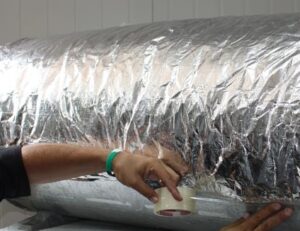
This standby heat loss is what a geyser blanket is designed to address. It is not a complicated product. It is essentially a layer of insulation wrapped around the outside of the tank that slows the rate at which heat escapes. The less heat that escapes, the less often the element needs to run, and the less electricity gets used.
Does a geyser blanket save electricity enough to matter
Here is where it is worth being specific rather than vague. A standard 150-litre electric geyser with a 3kW element set to 60 degrees Celsius in an uninsulated roof space might run its element for 5 to 7 hours per day across a 24-hour period just to maintain temperature. At South African electricity rates that currently average between R2.50 and R3.80 per kWh depending on your municipality, that is between R37.50 and R79.80 per day just to keep the water hot. Multiply that across a month and you are looking at R1,125 to R2,394 per month on geyser electricity alone.
A blanket that reduces standby losses by 30 percent would reduce those standby heating hours proportionally. That could translate to R337 to R718 per month in savings, depending on your specific tariff and how cold your roof space gets. Over a year, those numbers become significant, potentially R4,000 to R8,600 in savings annually.
Those are not guaranteed figures. They are estimates based on reasonable assumptions and will vary. But the direction is consistent and backed by independent research. A geyser blanket does save electricity, and in the South African context where electricity is expensive and becoming more so, the savings are often meaningful relative to the low cost of the product itself.
What type of geyser blanket works best
Most geyser blankets available in South Africa are made from fibreglass or polyester insulation wrapped in a foil-backed or woven fabric shell. The key specification to look at is the R-value, which measures thermal resistance. A higher R-value means better insulation. Most quality geyser blankets have an R-value between 1.5 and 2.5, which is adequate for typical South African conditions.
Some geysers, particularly newer models from established local manufacturers, come with a degree of built-in insulation from the factory. If you have a newer unit with thick foam insulation already in the tank walls, the additional benefit from a blanket will be smaller, though it will still exist. Older geysers with thin tank walls and minimal built-in insulation will benefit the most.
You can check whether your existing geyser has meaningful built-in insulation by touching the outer surface of the tank after it has been sitting for a few hours without being used. If the surface is noticeably warm to the touch, heat is escaping and a blanket will help. If it feels roughly room temperature, the existing insulation is doing a reasonable job already.
How a geyser blanket is fitted and what it costs
Fitting a geyser blanket is straightforward and most homeowners can do it themselves. The blanket wraps around the cylindrical body of the tank and is secured with the straps or ties that come in the kit. The important thing is to leave the pressure control valve, the temperature pressure relief valve, the thermostat housing, and all pipe connections uncovered. These components need to remain accessible and cannot be wrapped over for safety reasons.
In terms of cost, blankets for standard South African geyser sizes of 100, 150, and 200 litres are available from hardware retailers including Builders Warehouse and Leroy Merlin, as well as plumbing supply stores and online retailers. Prices range from around R180 for a basic 100-litre option to R420 or more for a quality 200-litre kit. Some blankets include pipe insulation lagging for the first section of the hot water outlet pipe, which is a worthwhile addition.
If you are not comfortable going into the roof space yourself, a handyman or plumber can fit the blanket. Labour for this type of job typically runs between R300 and R600, making the total installed cost somewhere between R480 and R1,020 depending on the size and who does the work.
At those prices, the payback period on a geyser blanket is often less than three months, which makes it one of the better value home energy improvements available.
What affects how much electricity you actually save
There are a few variables that influence the real-world result, and it is worth understanding them so your expectations are realistic.
Roof space temperature matters a great deal. A geyser in a warm, enclosed roof space in Durban loses less heat in winter than one in a cold open roof space in Johannesburg. The bigger the temperature difference between the water inside the tank and the air outside it, the more heat escapes, and the more a blanket helps.
Thermostat temperature also plays a role. Geysers set to 70 degrees Celsius lose heat faster than those set to 60 degrees, simply because the temperature differential is greater. If you are looking to save electricity, reducing your thermostat setting from 70 to 60 degrees (still well above the 55-degree threshold generally recommended for safety against legionella bacteria) is a complementary step worth taking. This does not cost anything and can further reduce your electricity usage.
Tank size matters too. A 200-litre geyser has more surface area and more water to keep hot, so it loses more heat than a 100-litre unit. The relative benefit of a blanket is proportional across sizes, but the absolute saving in kilowatts is larger on a bigger tank.
Other energy-saving measures that work well alongside a geyser blanket
A geyser blanket is a good starting point, but it works best as part of a broader approach to reducing hot water energy costs. Here are a few things that complement it well.
A geyser timer is probably the most impactful additional step for most households. A timer switches the element off during hours when nobody is using hot water, typically overnight and during the middle of the working day. Because the tank retains heat reasonably well even without a blanket, and much better with one, switching off for 8 to 10 hours overnight rarely results in cold water in the morning. Timer units cost between R500 and R1,200 installed, depending on type and whether any electrical work is needed.
Pipe insulation on the hot water outlet pipes is often overlooked. Heat dissipates from exposed hot water pipes constantly, particularly the first metre or so leaving the geyser. Foam lagging pipe insulation costs R20 to R60 per metre and takes 15 minutes to fit yourself. It is not a major saving on its own but it contributes.
A solar geyser or heat pump conversion is a larger investment but can reduce geyser electricity consumption by 60 to 90 percent in the right conditions. A heat pump retails for roughly R8,000 to R20,000 installed, and a solar system can range from R12,000 to R35,000 or more depending on size and configuration. These are longer-term decisions with payback periods of several years, but they represent the most significant step you can take if reducing your electricity bill is a serious priority.
The one thing most people overlook
Most homeowners who buy a geyser blanket install it and then forget about it, which is fine. But the one thing they miss is checking whether the blanket is still properly fitted six to twelve months later. In a busy roof space where other work gets done, or where the blanket straps were not secured firmly enough at installation, the blanket can shift, develop gaps, or partially detach from the tank surface. Air gaps between the insulation and the tank reduce effectiveness significantly. It is worth going up once a year to check that everything is still properly positioned.
Common mistakes that reduce the benefit
Buying the wrong size is the most frequent error. A blanket that does not cover the full cylindrical surface area of the tank leaves sections exposed and reduces the overall insulation effect. Always check the litre capacity of your geyser before buying.
Covering safety valves is a more serious mistake that some people make when trying to get maximum coverage. The temperature pressure relief valve and the pressure control valve must remain clear at all times. Covering them prevents them from operating correctly in an overpressure situation, which is a safety issue.
Fitting the blanket while the geyser is still hot is more of a discomfort issue than a safety one, but working with a very warm tank surface in a cramped roof space is unpleasant. Switch the geyser off and let it cool for at least an hour before fitting.
Read more: Do geyser blankets work
Does a geyser blanket save electricity in a way that makes a real difference for South African households? Based on the numbers and the conditions that most homes deal with, yes it does. It is not a silver bullet that will transform your electricity bill overnight, but it is a low-cost, low-effort step that delivers a genuine and ongoing reduction in standby energy use. For a product that costs between R180 and R420 and takes under an hour to fit, that is a good return on investment by any measure. Combined with a timer, lower thermostat settings, and pipe insulation, the cumulative effect on your monthly bill can be quite meaningful over time.