
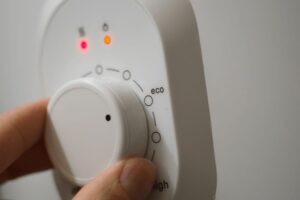

Your geyser is running but the water coming out is either lukewarm at best or scalding at worst. Or maybe the element keeps tripping the circuit breaker and you’re not sure whether the problem is the element itself or the thermostat telling it to overheat. Knowing how to test a geyser thermostat is genuinely useful in these situations because it can tell you whether the thermostat is the problem before you spend money on a plumber’s callout or replace a part that wasn’t faulty.
In South African homes, geyser thermostats fail more commonly than people expect. The combination of hard water in many areas, voltage fluctuations from load shedding, and geysers that run continuously without timers all contribute to thermostat wear over time. The good news is that a thermostat test is one of the more straightforward diagnostic steps available to a careful homeowner. You don’t need specialist equipment, just a basic multimeter that you can buy at most hardware stores for R150 to R450, and an understanding of what you’re testing for. This guide walks you through the full process safely and explains what the results mean.
Quick answer
A geyser thermostat can be tested using a multimeter set to the continuity or resistance function. A functioning thermostat should show continuity (or very low resistance) when it’s below its set temperature, and open circuit (no continuity) when it’s above the set temperature. If it shows open circuit in both states or continuity in both states regardless of temperature, the thermostat has failed and needs replacement. The element should be tested at the same time to rule it out as a contributing cause.
What a geyser thermostat actually does
Before getting into the testing process, it helps to understand what the thermostat is doing inside the geyser, because knowing its function helps you interpret the test results.
A standard electric geyser thermostat is a temperature-sensitive switch. It has two states: closed (allowing current to flow through the heating element) and open (cutting off current to the element). When the water temperature in the tank is below the thermostat’s set point, typically around 55 to 65 degrees Celsius in most South African homes, the switch is closed and the element heats. When the water reaches the set temperature, the thermostat switches open and the element stops heating. When the water cools below the set point, the thermostat closes again and the heating cycle restarts.
A thermostat can fail in two ways. It can fail open, meaning the switch stays open regardless of water temperature and the element never heats. This produces cold or lukewarm water. Or it can fail closed, meaning the switch stays closed regardless of temperature and the element heats continuously without ever switching off. This is the more dangerous failure because it can lead to overheating, excessive pressure, and in the worst cases contributes to conditions that stress the safety valve and tank.
Most geysers also have a high-limit thermostat, sometimes called an overheat cutout or thermal cutout, separate from the main thermostat. This is a safety device set to a higher temperature, typically around 85 to 90 degrees Celsius, that cuts power to the element if the main thermostat fails closed. If this cutout has tripped, the element won’t heat at all until it’s manually reset. Knowing whether this cutout has tripped is part of the diagnostic process.
Safety first: what you must do before testing
This is not optional. Working around a geyser involves electricity and hot water under pressure, and cutting corners here creates real risk.
Switch off the electrical supply to the geyser at the dedicated circuit breaker in your distribution board. Confirm it’s off by testing with a voltage tester or non-contact tester at the geyser access panel before removing anything.
Close the cold water supply valve to the geyser. This is usually located on the cold water inlet pipe near the unit. If you can’t locate or access it, close the main water supply to the house.
Allow the water in the tank to cool before accessing the thermostat if the geyser has been recently running. A tank full of very hot water is under pressure and should not be disturbed while at operating temperature.
Have your multimeter ready and understand how to use it. If you’ve never used one before, spend five minutes reading the basic functions before you start. The test uses either the continuity setting (which beeps when there’s a complete circuit) or the resistance setting (ohms). Both work for this test.
How to access the thermostat
Most electric geysers in South Africa have an access panel on the side of the tank, usually secured with two or four screws. Remove the panel and you’ll find the thermostat underneath a layer of insulation blanket material. Fold this back carefully to expose the thermostat and the element connection points.
The thermostat is typically a flat rectangular component clipped or strapped against the tank body. It makes contact with the tank surface to sense water temperature through the tank wall. There will be electrical terminals with wires connected to them. Note or photograph the wiring before disconnecting anything. Getting the wiring back wrong when reassembling creates a fault.
Disconnect the thermostat from the circuit by removing the wires from its terminals. You need it disconnected from the circuit to test it in isolation. Label or photograph which wire goes where before removing.
How to test a geyser thermostat with a multimeter
With the thermostat removed or disconnected and at ambient temperature (below its set point), set your multimeter to continuity mode (the diode/beep symbol) or to the lowest ohms setting.
Touch one multimeter probe to each of the thermostat’s terminals. In continuity mode, a functioning thermostat at ambient temperature should beep, indicating a complete circuit. In resistance mode, it should show a very low reading, close to zero ohms. This confirms the switch is closed at low temperature, which is the correct behaviour.
Now test at higher temperature. You can do this by holding the thermostat gently against something warm, like a cup of hot water, for a minute or two. As the thermostat reaches its set temperature, a functioning unit should click and the continuity should disappear: the multimeter will stop beeping or show an open circuit reading. This confirms the switch is opening at the correct temperature.
If the thermostat shows no continuity at ambient temperature, it has failed open. The element would never receive power and the water would never heat.
If the thermostat shows continuity at high temperature and never opens, it has failed closed. The element would heat continuously and the water would overheat.
Either failure condition means the thermostat needs replacement.
Testing the high-limit cutout
The high-limit thermostat or thermal cutout looks similar to the main thermostat and is often mounted nearby. It usually has a small red or white reset button visible on its face. If this button is protruding, the cutout has tripped. Press it firmly to reset.
Test it the same way as the main thermostat. At ambient temperature it should show continuity. If it’s failed open and won’t reset, it needs replacement.
Testing the element at the same time
Since you’re already in the access panel with your multimeter, it’s worth testing the element too. A faulty element often produces the same cold water symptom as a faulty thermostat, and it makes sense to rule it out in the same session.
Disconnect the element wires. Set the multimeter to resistance mode. Touch the probes to the two element terminals. A functioning element will show resistance in a specific range depending on its wattage: a 2kW element typically reads around 24 ohms, a 3kW element around 16 ohms, and a 4kW element around 12 ohms. If the reading is zero ohms, the element has shorted. If it shows open circuit (no reading), the element has failed. Either way, replacement is needed.
Also test for earth leakage by touching one probe to an element terminal and the other to the element body or the tank body. A functioning element should show open circuit here, meaning no current path to the earth. Any continuity reading indicates the element has developed an earth fault and must be replaced.
When to call a professional
Knowing how to test a geyser thermostat is useful, but there are situations where the professional option is the right one:
If you’re not comfortable working around electricity, even with the circuit isolated, call a plumber. The risk of a mistake is not worth the saving on a callout.
If the testing reveals both the thermostat and element have failed, particularly if the element has an earth fault, a plumber should carry out the replacement to ensure the work meets compliance requirements.
If the high-limit cutout keeps tripping repeatedly after being reset, something is causing the water to overheat consistently. This needs a plumber to diagnose the root cause rather than just resetting the cutout each time.
If the thermostat tests fine but the water still isn’t heating correctly, the fault may be electrical rather than mechanical, such as a wiring issue or a supply problem, and an electrician or plumber should assess.
Cost of thermostat and related repairs in South Africa
Understanding the costs helps you decide whether to DIY the diagnosis, call a professional for the full job, or a combination of both.
Multimeter (if you don’t own one): R150 to R450 at most hardware retailers. A basic multimeter is worth owning regardless of this specific task.
Thermostat replacement: A compatible geyser thermostat costs R150 to R450 for the part depending on the brand and specifications. Having a registered plumber supply and fit it typically runs R600 to R1,400 total including the callout. This depends heavily on your area and the plumber.
High-limit cutout replacement: Part costs R120 to R350. With professional fitting the total is usually R500 to R1,000.
Element replacement: Elements cost R350 to R900 depending on kW rating and brand. Professional replacement including the callout runs R900 to R2,000 in most metros.
Combined thermostat and element replacement: If both need replacing, which is common in older geysers, doing them together in one callout saves on the call-out fee. Total cost for both parts and a single callout typically runs R1,400 to R2,800.
Full geyser replacement: If the tank is old and multiple components have failed, replacement is sometimes more cost-effective than ongoing repairs. A new 150L to 200L electric geyser costs R3,500 to R7,500, with installation and compliance adding R2,500 to R5,000.
Plumber callout for diagnosis only: If you’d rather a professional carry out the how to test a geyser thermostat process and diagnosis from the start, callout fees in South Africa range from R500 to R950 depending on area, and diagnosis is typically included in this fee.
Common mistakes people make
Replacing the thermostat without testing the element first. Both components sit in the same access panel and produce similar symptoms when they fail. Testing both costs nothing extra and ensures you’re not paying for a thermostat replacement while the actual problem is a failed element.
Not resetting the high-limit cutout before assuming the thermostat has failed. The cutout trips in response to overheating events, including power surges during load shedding, and is often the only thing that actually needs attention. Many callouts are resolved by pressing a reset button that the homeowner didn’t know existed.
Reconnecting thermostat wires in the wrong configuration after testing. A thermostat connected incorrectly may run the element continuously or not at all. Photographing the wiring before disconnecting takes ten seconds and prevents this.
Attempting to adjust the thermostat set point by turning its dial without understanding what temperature it’s currently set to. In South Africa, geysers should generally not be set above 60 degrees Celsius for energy efficiency and safety. Setting them too low below 55 degrees can allow conditions that promote bacterial growth in the stored water. Most plumbers set them in the 55 to 60 degree range.
Prevention tips
Fit a geyser timer if you haven’t already. Running a geyser continuously puts unnecessary cycles on the thermostat and element. A timer that runs the geyser for two to three hours in the morning and two hours in the evening is usually sufficient for most households and significantly reduces thermostat cycling. A basic timer costs R250 to R600 and is installed by an electrician in an hour or less.
Have the thermostat and element checked during any geyser service. A qualified plumber can measure element resistance and assess the thermostat condition as part of a routine service every three to five years. Catching a degrading element before it fails completely avoids the cold shower and emergency callout scenario.
In hard water areas, consider having the element inspected more frequently. Scale buildup on the element surface causes it to run hotter than designed, which stresses the thermostat and shortens both components’ effective lives.
Knowing how to test a geyser thermostat puts you in a much better position when your hot water stops behaving as it should. The test itself takes less than twenty minutes once you’ve gathered your equipment, and the result clearly tells you whether the thermostat, the element, or the high-limit cutout is responsible. Even if you decide to hand the actual repair over to a plumber, going into that conversation with a confident diagnosis means you’re less likely to pay for guesswork and more likely to get the right part replaced the first time. For most South African homeowners comfortable with basic safety precautions and a multimeter, this is a genuinely useful skill to have in your back pocket.
Read more: Ariston Geyser