
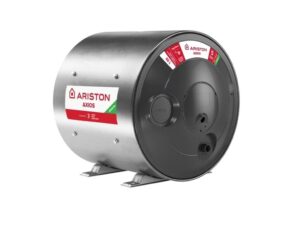

When a geyser bursts or stops working, most South African homeowners find themselves suddenly having to make a purchasing decision they have never really thought about before. You call a plumber, they mention a few names, and one of those names might be Ariston. An Ariston geyser sits in a slightly different part of the market compared to the more commonly specified local brands, and understanding what that difference actually means in practical terms is worth doing before you sign off on an installation.
This guide covers the Ariston range available in South Africa, how the units compare in terms of features and price, what a full installation realistically costs, and what to think about when deciding whether this is the right choice for your home. It is aimed at homeowners who want to understand what they are buying rather than just taking whatever the plumber recommends without context.
Ariston is an Italian brand with a long history in water heating, distributed in South Africa and available through plumbing merchants, hardware retailers, and installers. Their electric storage geysers are generally positioned slightly above the entry-level market and are known for features like enamel-lined tanks, improved factory insulation, and digital controls on some models. Prices for the unit alone range from around R4,500 to R14,000 depending on the size and model. Full installed costs typically fall between R9,000 and R22,000. They suit homeowners who want a reasonably well-specified unit without moving into premium territory.
What does buying and installing an Ariston unit involve?
The core process is the same as any geyser installation. You choose a unit, a registered plumber installs it according to SANS standards, and all the associated safety components including the pressure control valve, drip tray, and expansion unit are correctly fitted. What differs with Ariston compared to some locally manufactured alternatives is the product positioning and feature set.
Ariston markets their electric storage range on the strength of their tank lining technology, which uses an enamel coating designed to reduce corrosion and extend tank lifespan. They also offer improved factory insulation compared to many standard units, which is relevant because a better-insulated tank loses heat more slowly and the element runs less frequently to compensate. This translates directly to lower running costs, though the degree of difference depends on your usage patterns and how cold your ceiling space gets.
Some models include a digital thermostat and display, which allows more precise temperature control than the standard dial-type thermostat found on most basic units. For most households this is a nice feature rather than a necessity, but it does allow you to programme the geyser more precisely and can help with energy management.
The availability of parts and after-sales support is worth checking before committing to any brand. Ariston has been in the South African market long enough that parts are generally obtainable through their distribution network, but it is worth confirming that your specific model is well-supported and that your plumber has experience with the brand.
Models and options in the South African market
The Ariston range available locally covers several categories, and knowing which one suits your situation saves time and prevents mismatched purchases.
Standard electric storage geysers are the core of the local range. These are cylindrical tanks in sizes from 50 litres up to 200 litres in most configurations. The 80 and 100 litre models are well-suited to smaller homes or single occupant situations. The 150 litre model covers a couple or a small family with moderate usage. The 200 litre model is appropriate for families of four or more. The standard range uses a stainless steel or enamel-lined tank depending on the model tier.
Slimline models are available in configurations designed to fit into tighter ceiling spaces or under counters in kitchens and bathrooms. These are useful where the geyser needs to go into a spot that a standard cylindrical unit cannot physically fit. The trade-off is usually a slightly smaller capacity relative to the footprint.
High-pressure vs low-pressure variants follow the same distinction as other brands. High-pressure units connect to municipal mains water. Low-pressure units are designed for gravity-fed or tank-supplied systems. Confirming your supply type before purchasing is essential. Fitting the wrong unit for your water supply type is one of those mistakes that creates persistent problems that no service call will resolve.
Combination solar-electric units are also part of the Ariston offering, designed to work in conjunction with solar collector panels. These are more niche and represent a different purchase decision with a different cost structure, but they are worth knowing about if your longer-term plan includes solar water heating.
What does an Ariston geyser cost in South Africa?
Getting clear on the full cost picture before agreeing to an installation avoids the frustration of a bill that is significantly higher than expected.
Unit prices (supply only): Entry-level 80 to 100 litre models start at around R4,500 to R6,500 depending on the retailer and the specific model within the range. Mid-range 150 litre units typically fall between R6,500 and R9,500. A 200 litre unit is generally priced from R9,000 to R13,000 at retail, with some premium models reaching R14,000 or more. These prices reflect retail and plumbing merchant pricing and can vary with promotions, trade accounts, and regional availability.
Installation costs: A standard replacement installation, where the old unit is removed and the new one fitted in the same position, typically costs between R2,500 and R5,500 in labour depending on your location, the plumber’s rate, and how straightforward the access is. Geysers in difficult ceiling positions, on high roofs, or requiring significant pipe rerouting cost more.
Full installed cost estimates: A 100 litre unit fully installed in a straightforward replacement situation typically comes to R8,000 to R12,000. A 150 litre unit under similar conditions runs between R10,000 and R16,000. A 200 litre unit installed in a typical suburban home falls in the R14,000 to R22,000 range depending on the specific model and labour involved.
Additional costs that often catch people out: A replacement pressure control valve is required with every new geyser installation and should never be reused from the previous unit. Budget R500 to R900 for this. A new drip tray and drain, if not already in place, costs R400 to R700. An expansion unit adds R600 to R1,000 fitted. If the old geyser burst and caused water damage to the ceiling, that is a separate repair cost entirely and is usually handled through home insurance. All of these are legitimate and necessary costs, not plumber padding. They add R1,500 to R2,600 to the total before labour.
How the installation process works
The process begins with selecting the unit and confirming your plumber is registered with the relevant industry body. Registered plumbers can issue a plumbing compliance certificate, which is a legal requirement under South African regulations and something your home insurer will likely ask for if a water damage claim arises later.
On installation day, the water supply to the geyser is isolated and the electrical circuit is switched off at the DB board. The old unit is drained and removed. The new unit is mounted in the bracket or strap supports, connected to the water supply, and wired into the electrical circuit by the plumber or a certified electrician depending on how the work is scoped. All safety fittings are either replaced or confirmed to be in good condition.
Once the tank is filled, the system is pressure-tested and checked for leaks at all connection points. The element is powered up and the thermostat is set, typically to 60 degrees Celsius which is the standard South African setting for safe hot water supply. Your plumber should walk you through the thermostat controls, particularly if the unit has a digital interface that is different from what you have had before.
The compliance certificate should be handed over on the day. If a plumber does not mention it and does not provide it, ask for it before paying in full.
For a standard replacement in a reasonably accessible ceiling, the whole process takes half a day to a full day. More complex jobs take longer, and that is normal.
Common mistakes when buying or installing a new geyser
Choosing a unit based on price alone without factoring in running costs is something many people do under pressure when a geyser has just failed and they need hot water restored quickly. A slightly more expensive unit with better insulation may cost less to run over its lifespan than a cheaper unit that loses heat faster and runs the element more often. That comparison is worth making even in a rushed situation.
Not confirming the water supply type before purchasing is a recurring issue, particularly in older homes that have had modifications to their water supply over the years. High-pressure units installed in low-pressure systems do not perform well and the fix is usually to replace the unit entirely. That is an expensive lesson.
Skipping the replacement of safety components like the pressure control valve to save money is something that occasionally happens when a homeowner is trying to keep costs down. This is not a good trade-off. The pressure control valve protects the tank from over-pressure situations and is a safety device, not an optional extra.
Failing to get the compliance certificate and later discovering that a home insurance claim is complicated because the installation cannot be verified is a situation that is entirely avoidable. The certificate costs nothing when working with a registered plumber.
Most people only think about their geyser when it stops working, which means they end up making rushed decisions. If your unit is older than ten years, taking some time to understand your replacement options before it becomes an emergency gives you the space to make a better decision.
How to choose the right model for your home
Here is what actually matters when making this decision.
Capacity: The same sizing logic applies regardless of brand. Two people can generally manage with 80 to 100 litres. A household of three to four people needs 150 litres as a minimum and 200 litres if usage is high or shower timing is concentrated in the morning. Larger households or homes with high usage patterns should start at 200 litres.
High-pressure vs low-pressure: Confirm your water supply type with your plumber before the purchase is made. If you are on mains municipal supply with adequate pressure, high-pressure is standard. If you are on a gravity-fed or tank supply, you need a low-pressure unit.
Features vs budget: The digital thermostat and improved insulation on mid-range and upper Ariston models are genuine benefits rather than marketing additions. Whether they justify the price premium over a basic unit depends on your budget and how long you plan to stay in the property. In a home you intend to own for many years, a better-specified unit often makes sense. In a rental property or a home you plan to sell soon, the basic size-appropriate unit is usually the practical choice.
Ceiling space and physical fit: Check whether a standard cylindrical unit fits your ceiling void before ordering. If height is limited, the slimline range exists for exactly this situation.
An Ariston geyser sits in a part of the market where the product is a step up from the most basic local options without reaching into premium territory. The improved tank lining, better factory insulation, and digital controls on certain models are practical benefits rather than cosmetic ones. Whether those benefits justify the price difference over a simpler unit comes down to your household’s usage, your budget, and how long you expect to keep the property.
What matters more than the brand choice is getting the sizing right, using a registered plumber, replacing all the safety fittings properly, and walking away with a compliance certificate in hand. Get those fundamentals right and the unit itself will serve you well regardless of which range you choose.
Read more: How to test a geyser thermostat