
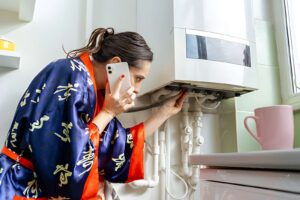

There is a particular kind of frustration that comes from jumping in the shower too soon after someone else and getting hit with a wall of cold water. Or turning on the hot tap at the kitchen sink and waiting, and waiting, and wondering if something is actually wrong. If you have been dealing with longer wait times than usual, or you just got a new unit installed and are not sure what to expect, understanding how long does a water heater take to heat up can save you a lot of unnecessary worry and help you catch a real problem if one exists.
The answer is not the same for every home or every unit. It depends on the type of water heater you have, the size of the tank, the incoming water temperature in your area, and how well the unit has been maintained over time. This guide breaks it all down by unit type, explains what normal looks like, and covers the most common reasons a heater takes longer than it should.
The quick answer
A gas tank water heater typically heats a full tank in 30 to 60 minutes. An electric tank unit takes longer, usually 60 to 90 minutes for a full recovery. Tankless water heaters produce hot water almost instantly once a tap is open, though the water sitting in the pipes still needs a moment to reach you. Heat pump water heaters are the slowest of the electric options, often taking 1 to 2 hours for a full recovery. These are general ranges for a healthy unit under normal conditions. If your heater is taking significantly longer than this, something is likely off.
Recovery times by water heater type
Gas tank water heaters
Gas units heat water faster than electric ones because gas burners deliver heat more intensely and consistently than electric elements. A standard 40-gallon gas water heater with an input rating around 36,000 BTU will typically recover from a completely cold tank to the set temperature in about 30 to 40 minutes. A 50-gallon model with the same BTU rating takes roughly 40 to 55 minutes. High-efficiency or power-vent gas units with input ratings of 60,000 BTU or more can cut recovery time down to 20 to 30 minutes for the same tank sizes.
These times assume the incoming water is around 60 degrees Fahrenheit, which is typical in many parts of the U.S. In colder climates where groundwater can be closer to 40 to 45 degrees in winter, recovery takes noticeably longer because there is a greater temperature gap to close.
Electric tank water heaters
Electric units are the most common type in many homes, and they are also the slowest at recovery. A standard 40-gallon electric water heater with two 4,500-watt elements takes roughly 60 to 80 minutes to heat a fully cold tank. A 50-gallon model with the same element wattage takes around 80 to 90 minutes. Units with higher-wattage elements, such as 5,500-watt models, can shave 10 to 15 minutes off those times.
One thing most people do not realize is that electric water heaters do not heat the entire tank at once. The upper element activates first, heating the top portion of the tank, which is why you get some usable hot water fairly early in the recovery cycle even before the whole tank is up to temperature. The lower element then handles the rest. This staged heating is normal and by design.
Tankless water heaters
Tankless units, whether gas or electric, do not store water at all. They heat water on demand as it flows through the unit. In theory this means instant hot water, and in terms of the heating process itself, that is true. The unit reaches full output temperature within a few seconds of activation. The catch is that you still have to wait for the hot water to travel from the unit through the pipes to the tap you are using. In a large home where the tankless unit is installed far from certain fixtures, that wait can be 30 seconds to over a minute, which can feel like a long time when you are standing at the sink.
Gas tankless units have higher flow rate capacities and can handle simultaneous demand from multiple fixtures more easily. Electric tankless units work well for smaller homes or point-of-use applications but may struggle to keep up if multiple taps are running at once, particularly in colder climates where the incoming water is cold enough to require significant heating.
Heat pump water heaters
Heat pump water heaters are the most energy-efficient electric option, but they are not the fastest. Because they extract heat from surrounding air rather than generating it directly, they work more slowly than resistance heating. A 50-gallon heat pump unit typically takes 1 to 2 hours for a full cold recovery. Most models switch to resistance heating mode if demand is high and the heat pump cannot keep up, which improves performance but reduces efficiency temporarily. If your household uses hot water heavily in the morning, a heat pump unit may benefit from being set on a timer so it starts its heating cycle before peak demand.
Solar water heaters
Solar units are less common but worth mentioning. Recovery time on a solar system depends almost entirely on weather conditions and sunlight availability. On a clear sunny day, recovery can be similar to a gas unit. On cloudy days or in winter months, the backup heating element, usually electric, takes over, and times revert to those of a standard electric unit. Solar systems are rarely the sole heat source in a home precisely because of this variability.
What slows down recovery time
Even a healthy water heater can take longer than expected if certain conditions are present. Here is what most commonly adds time to the heating cycle.
Sediment buildup inside the tank. This is the big one. As minerals from your water supply settle at the bottom of the tank over time, they form an insulating layer between the burner or lower heating element and the water itself. The unit has to work harder and run longer to push heat through that layer. A heater with significant sediment buildup can take 25 to 50 percent longer to recover than a clean unit of the same size and type. If you have never had the tank flushed and it has been more than five or six years, sediment is likely a factor.
Failing heating elements. On electric water heaters, a partially failed element does not deliver full heat output. The functioning element tries to compensate, but it cannot fully make up the difference, so recovery slows significantly. If you notice that the first part of your shower is fine but the water gets cool faster than it used to, and then takes a long time to recover, this pattern often points to a struggling lower element.
A thermostat set too low or malfunctioning. If the thermostat is set below where it should be, the unit will reach its target temperature quickly but the water will feel lukewarm. If the thermostat is malfunctioning and reads the temperature incorrectly, it may shut off heating before the water is actually up to a useful temperature. Either way, you end up with water that feels like it never quite heated properly.
Cold groundwater temperatures. This is seasonal and regional rather than a unit problem, but it genuinely affects recovery times. In northern U.S. states and Canada, groundwater in January can be 38 to 45 degrees Fahrenheit rather than the 55 to 65 degrees it might be in summer or in warmer regions. The heater has to work harder to bridge that gap, and recovery takes longer as a result.
Undersized unit for household demand. An undersized water heater that gets drained entirely before it can recover is just going to run long regardless of how well it is working. If your household has grown since the unit was installed, or if patterns of use have shifted, the tank size may no longer match your needs. That is not a malfunction, it is just a mismatch.
How to speed things up without replacing the unit
Flush the tank. Removing sediment is the single most effective maintenance step for restoring normal recovery times on an older tank unit. Drain the tank fully via the drain valve at the bottom, flush with cold water to clear the settled deposits, then refill. This is a job you can do yourself in about an hour, or have a plumber handle for $80 to $200. The difference in recovery time after a thorough flush can be significant on a unit that has gone years without one.
Check and replace heating elements. On an electric water heater, testing the elements with a multimeter takes about 15 minutes and requires no special skills beyond basic comfort with switching off a circuit breaker. Replacement elements cost $15 to $40 each, and a plumber will typically charge $150 to $300 to replace both, including labor. Addressing a failing element restores the heating capacity the unit was designed to deliver.
Raise the thermostat slightly. If your unit has been set below 120 degrees Fahrenheit, raising it to 120 gives you more usable hot water per tank because the mixing ratio at the tap shifts. You are not actually speeding up the heating cycle, but you are effectively getting more hot water out of the same amount of heated water, which reduces how often the unit needs to fully recover.
Install a recirculation pump. A hot water recirculation pump keeps hot water moving slowly through your pipes so it is always near the tap when you need it. This does not change how fast the water heater itself heats up, but it eliminates the wait for hot water to travel from the unit to the fixture. Basic recirculation kits start around $150 to $200 for the pump, with installation typically adding $100 to $250. For large homes where the water heater is far from certain fixtures, this is genuinely one of the most practical comfort upgrades available.
When longer recovery times signal a real problem
If your water heater is taking more than twice the expected recovery time for its type and size, something is usually wrong. A 40-gallon gas unit that takes two hours to recover is not just slow, it has a problem. Common culprits at that point include heavy sediment, a failing gas valve or thermocouple on a gas unit, one or both failed elements on an electric unit, or a thermostat fault.
At the more serious end, a unit that never fully recovers, where you can drain the tank entirely and it never gets back to the set temperature no matter how long you wait, may have a failed component or in some cases a gas supply issue that is limiting burner output below the rated input.
What repairs typically cost
Flushing a tank runs $80 to $200 with professional help, or just your time if you do it yourself. Replacing both heating elements on an electric unit costs $150 to $300 installed. Thermostat replacement runs $100 to $200 for parts and labor. A gas valve replacement on a gas unit typically costs $200 to $400 depending on the unit and the labor rate in your area. If the diagnosis points to a unit that is simply past its useful life, a replacement 40 to 50-gallon tank water heater costs $400 to $900 for the unit plus $200 to $500 for installation. Moving to a tankless unit costs more upfront, typically $800 to $1,500 for the unit and $500 to $1,000 to install, but eliminates recovery time concerns entirely since it heats on demand.
Common mistakes people make
The most common mistake is assuming a slow recovery time is just how the unit works, especially right after installation. A new unit that takes unusually long to heat up may have been installed with a thermostat set too low, or the cold water supply valve may not be fully open, limiting flow and causing unusual behavior during the fill cycle. It is worth checking the basics before assuming the unit is defective.
Another mistake is ignoring recovery slowdowns for years because hot water still eventually arrives. That gradual worsening is often sediment accumulation doing its damage quietly, and the longer it goes unaddressed, the more it affects efficiency and element life. It is not ideal to let it run that long.
Read more: How to check the thermostat on a hot water heater
Understanding how long does a water heater take to heat up for your specific setup gives you a useful baseline. When things take noticeably longer than that baseline, you have an early warning sign worth acting on. Most of the causes are fixable without replacing the unit, and catching them early is almost always cheaper than waiting until the heater gives out entirely. If you are within the normal ranges and just find yourself wanting hot water faster, a recirculation pump is probably the most practical improvement available to you without a full system upgrade.