
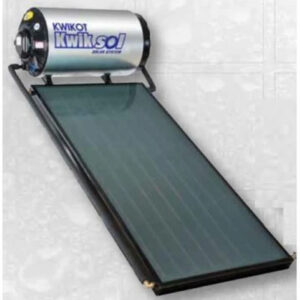

South Africa is genuinely one of the better places in the world to own a solar geyser. The country has high solar radiation levels across most provinces, electricity tariffs keep climbing, and load shedding has pushed a lot of households to rethink how they heat water entirely. If you’ve been looking at a Kwikot solar geyser as part of that rethink, you’re looking at one of the more established names in the local solar water heating market. Kwikot has been making electric geysers for South African homes for decades and their solar range builds on that same infrastructure, which means installation and servicing isn’t as unfamiliar territory for most local plumbers as some imported alternatives.
That said, solar water heating is a more complex investment than replacing a standard electric geyser. There are different system types to choose between, sizing decisions that really do matter, installation requirements that go beyond standard plumbing, and costs that vary considerably depending on your setup. This guide covers everything a South African homeowner needs to know before buying.
A Kwikot solar geyser system for an average South African home typically costs between R12,000 and R30,000 fully installed, depending on the system type, tank size, number of collectors, and installation complexity. It will significantly reduce electricity consumption for water heating, which accounts for roughly 40 to 50 percent of an average household’s electricity bill. Most systems pay for themselves within four to eight years depending on usage and electricity tariff increases.
What a Kwikot solar geyser system actually involves
A solar water heating system is not just a geyser with a solar panel stuck on top. It’s a complete hot water system with multiple components that work together. Understanding what each part does helps you make better decisions about what you actually need.
The solar collectors are the panels mounted on the roof that absorb sunlight and convert it to heat. These are not photovoltaic (electricity-generating) panels. They are thermal collectors, either flat plate or evacuated tube design, that heat a fluid which then transfers heat to your water.
The storage tank is an insulated geyser tank that holds the heated water. In most residential systems this is a 150L, 200L, or 300L tank depending on household size. Kwikot solar tanks are designed to integrate with their collector systems and include the necessary fittings and connections.
The circulation system moves heat between the collector and the tank. In a thermosiphon (passive) system, this happens naturally through convection as hot fluid rises. In a pumped (active) system, a small pump and controller manage the circulation. Each approach has tradeoffs discussed below.
The electrical backup element is an important component that most people underestimate. On cloudy days, in winter, or after periods of high demand, the solar input alone may not be sufficient to maintain water temperature. A backup element ensures you always have hot water regardless of solar conditions. The backup element is what keeps you from experiencing cold showers during a Cape Town winter or an overcast stretch in Johannesburg.
Types of Kwikot solar geyser systems
Thermosiphon (passive) systems
In a thermosiphon system, the storage tank sits directly above the collectors on the roof. Hot fluid naturally rises from the collectors into the tank above as it heats, and cooler water sinks back down, creating a circulation loop without any pump or electronic controller.
The advantage is simplicity. No pump, no controller, fewer components that can fail, and no electricity required for circulation. The disadvantage is the roof load. A 200L tank full of water is heavy, and not every roof structure is designed to carry that weight. A structural assessment may be required before installation, which adds cost and time.
Thermosiphon systems are typically the more affordable option and are well-suited to new builds where the roof structure can be designed for the load, or to homes with robust existing roof structures.
Split (pumped) systems
In a split system, the storage tank is installed inside the roof space or in a utility room, while only the collectors are on the roof. A small circulation pump and electronic controller manage the movement of heat transfer fluid between the collectors and the tank.
The advantage is that the heavy tank is not on the roof, which resolves the structural load problem. The system also allows more flexibility in collector orientation and tank placement. The disadvantage is greater complexity: the pump and controller are additional components that can fail, and the system requires a small amount of electricity to run the pump.
Split systems tend to cost more than thermosiphon systems of equivalent capacity and require a more technically capable installer. They are the better choice for homes where the roof structure is a concern or where internal tank placement is preferable.
Flat plate vs evacuated tube collectors
Within both system types, you can choose between flat plate collectors and evacuated tube collectors.
Flat plate collectors are a sealed insulated panel with a dark absorber plate inside under glass. They work well across a broad range of conditions and are durable and low-maintenance. Most Kwikot solar systems use flat plate collectors. They perform reliably in South African conditions and are generally less expensive than evacuated tube options.
Evacuated tube collectors use individual glass tubes with a vacuum layer for insulation, which makes them more efficient in cold or cloudy conditions. They’re more common in European markets where winter performance matters more. In South Africa’s generally sunny climate, the performance advantage of evacuated tubes over flat plates is less significant for most homeowners, and the additional cost is harder to justify.
Cost breakdown for South Africa
This is the section most people come looking for, so here’s a realistic breakdown.
System costs by type and size:
A thermosiphon system with a 150L tank and two flat plate collectors, suitable for two to three people, costs approximately R9,000 to R15,000 for the equipment. A 200L thermosiphon system for three to four people runs R12,000 to R19,000. A split system with a 200L tank runs R14,000 to R22,000 for the equipment due to the added pump, controller, and associated components. Larger split systems for five or more people with a 300L tank can reach R20,000 to R30,000 in equipment cost alone.
Installation costs:
Installation for a standard thermosiphon system on a suitable roof adds R5,000 to R9,000 in labour. A split system installation is more involved and typically costs R7,000 to R13,000 in labour, depending on complexity and internal pipe runs. If a structural assessment is required for a thermosiphon system, add R1,500 to R3,500 for the assessment.
Hidden or overlooked costs:
A compliance certificate from a registered plumber is required and typically costs R500 to R1,000. If your existing electrical wiring to the geyser needs upgrading to accommodate the backup element correctly, add R800 to R2,500 for electrical work. Roof penetrations and flashings for collector mounting add R500 to R1,500 depending on roof type. An annual service after installation, which is recommended, costs R700 to R1,500.
All-in estimates:
| System type and size | Estimated total installed cost | |
| Thermosiphon 150L, 2-person household | R14,000 to R22,000 | |
| Thermosiphon 200L, 3-4 person household | R18,000 to R28,000 | |
| Split system 200L, 3-4 person household | R22,000 to R35,000 | |
| Split system 300L, 5+ person household | R28,000 to R45,000+ |
These ranges cover most metro areas. Rural areas may be at the higher end due to installer availability.
How the installation process works
Getting a Kwikot solar geyser installed is a multi-step process that takes longer than replacing an electric geyser. Understanding the timeline helps you plan.
An initial site assessment is the starting point. A qualified installer visits to assess your roof orientation and pitch (south-facing roofs are not ideal in the southern hemisphere; north-facing is optimal), available roof space, existing plumbing configuration, and whether the roof structure can carry a thermosiphon system if that’s the route you’re taking. This assessment typically takes one to two hours and is either free or charged at a low flat rate.
Based on the assessment, you’ll receive a proposal covering the recommended system type, tank size, number of collectors, and total cost. This is the time to ask questions about warranty cover, the installer’s qualifications, and what the proposal includes versus what might be additional.
Installation day for a standard thermosiphon system typically takes a full day for two installers. Split system installations can take one and a half to two days depending on the internal pipe routing. Your household will be without hot water for part of the installation day, so planning accordingly helps.
After installation, the system needs to be commissioned: the circuit is pressure-tested, the backup element is connected and tested, the controller is configured for a split system, and the collector angle and orientation are confirmed. A compliance certificate is issued by the registered plumber on completion.
Common mistakes buyers make
Choosing system size based on tank capacity alone. A 200L tank is the most common residential size but the right size for your household depends on daily hot water usage patterns, not just the number of people. A family with teenagers who take long showers uses more hot water than the same household count suggests. Discuss your actual usage pattern with your installer before deciding on tank size.
Assuming solar means no electricity use at all. The backup element in a Kwikot solar geyser system draws electricity and will run on cloudy days, in winter, and after high demand periods. It won’t disappear from your electricity bill completely, but it should reduce significantly. Expecting zero electricity use for water heating leads to disappointment.
Using an unregistered installer to reduce costs. Solar water heating installations require registration and compliance certification. An unregistered installer creates problems for warranty claims, insurance purposes, and potentially for selling the property later where buyers or conveyancers check for compliance.
Not factoring in a roof structural assessment for thermosiphon systems. Some homeowners discover mid-project that their roof needs reinforcement before the tank can be mounted, which adds cost and delay. Getting the assessment done upfront avoids this.
Skipping the annual service. Solar systems need annual checks to confirm the heat transfer fluid is at the correct level and quality, that collector surfaces are clean, that connections and fittings are sound, and that the backup element is functioning correctly. Skipping this shortens the system’s effective lifespan and can void warranty cover.
How to choose the right system for your home
A few questions narrow down the right choice:
How many people are in your household and how much hot water do you use daily? A rough guide is 50L of tank capacity per person, but heavier users need more. Discuss this with your installer.
What orientation and pitch is your roof? North-facing at 30 to 45 degrees is optimal for South African conditions. East or west-facing roofs can work but require additional collectors to compensate for reduced efficiency. South-facing roofs are not suitable for solar collector mounting.
Can your roof structure support a thermosiphon system? If there’s any doubt, a split system removes this risk. Your installer or a structural engineer can advise.
What is your budget? If the total installed cost of a solar system is out of reach right now, a high-quality electric geyser with a good insulation rating and timer control is still more economical than an undersized or poorly installed solar system.
Is load shedding a key driver for you? A solar geyser with a backup element still depends on electricity for the backup function during extended periods of low solar input. If complete electricity independence for hot water is the goal, a gas geyser may actually serve that purpose more reliably than a solar system with a backup element.
Read more: Kwikot geyser warranty
A Kwikot solar geyser system is a meaningful investment that makes genuine long-term sense for most South African households with a suitable north-facing roof and the upfront budget to do it properly. The running cost savings on electricity are real, the technology is well-established in the local market, and a correctly installed system with annual servicing should run reliably for fifteen or more years.
The key decisions are getting the system type and size right for your specific household, using a qualified and registered installer, and going in with realistic expectations about what solar water heating does and doesn’t deliver. Get those things right and it’s one of the better home improvements available to South African homeowners right now.